Zero Was Just The Beginning
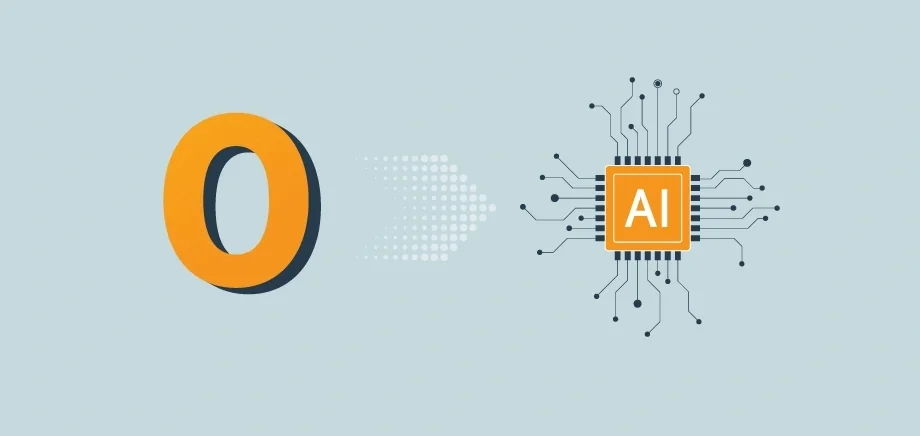
Every civilization gets one chance to adopt its foundational technology—and that chance is now.
Two conceptual earthquakes, separated by centuries, share a single pattern: a radical idea arrives from outside, dismantles the reigning cognitive infrastructure, and permanently rewires how an entire civilization thinks, works, and creates wealth. The first concept was zero. The second is AI. Zero did not merely add a digit to European mathematics—it dissolved the old Roman system entirely; unlocked commerce, science, and philosophy; and became the invisible foundation beneath Western civilization itself. Nobody who resisted it won.
AI is doing the same to America right now, compressing time, restructuring labor, democratizing genius, and raising questions about consciousness and accountability that no existing institution is fully equipped to answer. What follows are 10 precise comparisons that prove it.
-
Both arrivals were imports, not inventions.
Zero traveled from India through Arab scholars before reshaping European mathematics. AI’s foundational breakthroughs, from Turing to transformers, were global, but America industrialized and deployed them at scale. -
Both dismantled the reigning cognitive infrastructure.
Roman numerals made even basic arithmetic laborious. Zero’s place-value system demolished that barrier. Similarly, AI is dismantling rule-based software logic, replacing procedural code with probabilistic, self-improving systems. -
Both triggered institutional resistance before acceptance.
Medieval European clergy viewed zero with suspicion, associating nothingness with heresy. AI faces parallel resistance from regulators, ethicists, and labor institutions wary of its opacity and disruptive power. -
Both exponentially accelerated commerce.
Zero enabled double-entry bookkeeping and precise financial accounting, fueling European mercantile expansion. AI is compressing business cycles, automating supply chains, and accelerating capital allocation decisions at unprecedented speed. -
Both redefined what “intelligence” means.
Zero forced Europeans to accept that “nothing” could be a mathematical object. This was a conceptual revolution. AI forces Americans to question whether human reasoning is uniquely irreplaceable or merely pattern recognition. -
Both were initially tools of the elite.
Zero first penetrated European universities and merchant guilds, not common populations. AI’s most powerful capabilities remain concentrated in well-funded corporations and government agencies, widening an emerging knowledge class divide. -
Both restructured labor and professional skill.
Zero made human calculators more powerful but also more specialized. AI is automating cognitive tasks—legal research, medical diagnosis, writing—forcing rapid professional reskilling across the American economy. -
Both enabled previously impossible scientific leaps.
Without zero, calculus, physics, and astronomy could not have been formalized in Europe. Without AI, breakthroughs in protein folding, drug discovery, and climate modeling would remain computationally out of reach. -
Both created new ethical and philosophical anxiety.
Zero introduced the unsettling philosophy of void into European Christian thought. AI introduces equally unsettling questions about consciousness, autonomy, accountability, and what it means to be a moral agent. -
Both are infrastructure, not merely technology.
Zero became the invisible foundation beneath all of Western science and finance. AI is fast becoming the invisible substrate beneath American healthcare, law, media, education, and national security—foundational and irreversible.
History doesn’t reward the civilizations that debated transformative ideas longest—it rewards the ones that adopted them fastest and built most boldly upon them. Europe didn’t flourish by tolerating zero. It flourished by making zero the bedrock of everything.
The parallel demand on America today is not to manage AI cautiously from the sidelines. It’s to embed it decisively into every domain where human potential has previously been bottlenecked by time, cost, and cognitive limitation.
The entrepreneurs, educators, scientists, and leaders who treat AI as infrastructure rather than novelty will define the next century the way zero defined the last five. The foundation is already beneath your feet. The only question is what you choose to build.