The Greater Game: Chapter 2 – Greater Security
May 13, 2026
Hosted By
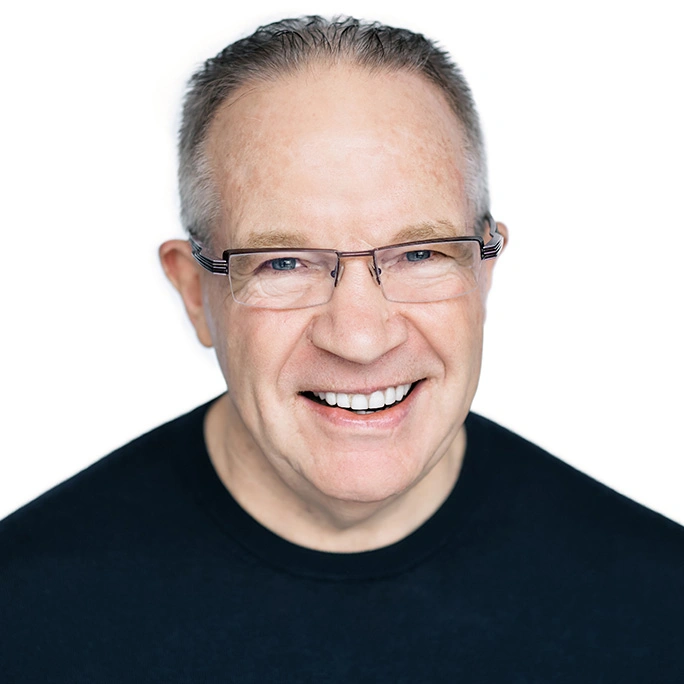 Dan Sullivan
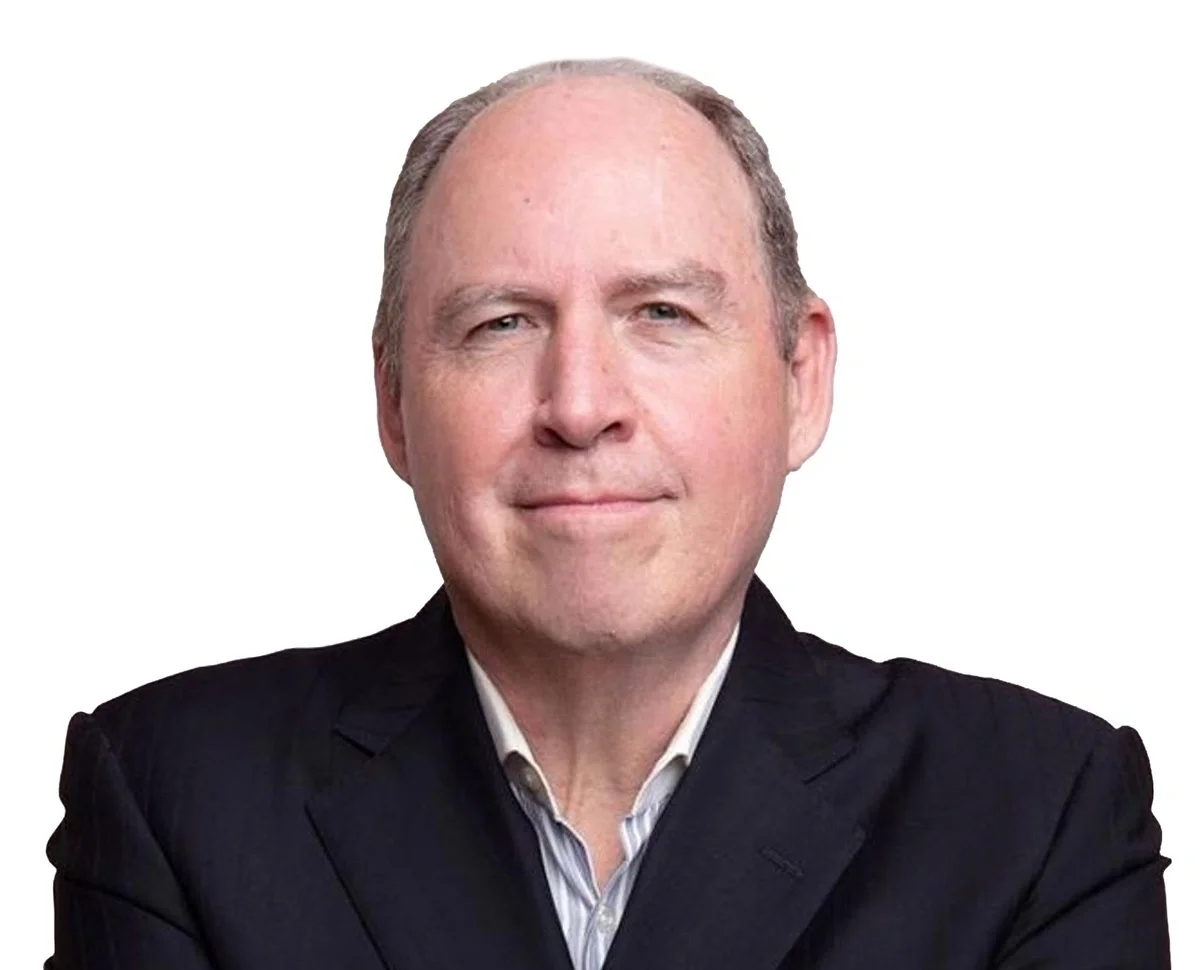 John Bowen
Greater security is the foundation that makes 100x possible. In this episode, Dan Sullivan and John Bowen unpack the second Greater Game multiplier and show how cash confidence, succession planning, and a virtual family office approach protect your wins so you can keep playing and winning the entrepreneurial game indefinitely.
Show Notes:
When you enter the 100x game, it’s almost like you become a new entrepreneur with a new set of rules.
In today’s high-regulation world, any area you haven’t properly protected is where governments and predators go after your unprotected money.
Tough economic cycles aren’t just survivable for prepared entrepreneurs; they’re often when you can make your greatest strategic gains.
The true scorecard for entrepreneurism is not just revenues, but your net worth and the valuation of your company.
Most successful entrepreneurs need a succession plan, but only a small minority have actually created one.
Entrepreneurs tend to see themselves striving at their current level instead of designing protections for their much bigger future self.
Over the next two years, most successful entrepreneurs plan to switch advisors because they’ve outgrown them and want greater confidence.
Tens of thousands of entrepreneurs are deeply invested in Strategic Coach® thinking tools to protect and multiply the value they’ve created.
Many entrepreneurs assume there’s a “proper” time to retire, but once you stop being useful, you stop being happy.
Resources:
The Greater Game by Dan Sullivan and John Bowen
Episode Transcript
John Bowen: Greater security: the foundation that makes everything possible. Dan, this is to me, it's one of the most important. You know, I grew up as a financial advisor. I have the privilege of coaching financial advisors, working with large institutions, building out training, as well as we now have a matching service for successful entrepreneurs to work with vetted, qualified financial advisors to get a second opinion. And, you know, so I'm really into this, if there were any one multiplier. To me, though, is so important. Where it hit me the most was when you and I were talking one time, and we were in a Free Zone coaching session, a cohort, and with 50, roughly, of my peers. And we got talking about the importance of cash confidence. And you were getting everybody to think about how life changes when you have the capital to be confident. I'd love you to just share that a bit.
Dan Sullivan: Yeah, well, the scorecard for entrepreneurism is actually money. I mean, it's revenues, but more than that, it's net worth, and it's the valuation of your company. We live in a high regulatory society. Any area where you've not protected yourself properly, the government wants your unprotected money. The other thing is that you may have some money that you're not careful how you're spending it. You don't have a game plan, really, of how money is going to improve every part of your life, but starting foremost with your business. We have ups and downs, you know, in the general economy and that's always going to be the case. The whole point is, these are like storms, and the question is, regardless of what the economic weather is, you can navigate. Not only navigate, not only, you know, sustain the storms, but you actually make your greatest progress when the economic system for most people is down. It's actually negative. This is very important. It's one thing to have ambition, but it's the other thing to have always confident ambition that no matter what happens in the outside world, you're going to be making progress.
John Bowen: Well, this is why this is a first level for entrepreneurs. You have to have the ambition, but you have to really have the security. And share some of the research on that. I mean, what we found is, you know, the super majority almost of the 5.4—so think of always, 5.4 are those, really entrepreneurs here, extremely successful. 58.2% feel they have plenty of assets, you know, the financial wherewithal to do it, where we look at the rest of the world, and remember, everybody's successful. We studied 94.6. The other big group of entrepreneurs, only 20%. And then when we start, we're using this term called VFO gap. This is a virtual family office gap, and I'll come to that. But when we surveyed now the entrepreneurs, and this is a little over 3,000 in this study, 84.6 need succession planning, but only 21.7 actually have done it. And this is something that's just so important. It's like so many of us wait to get our, we're gonna sell a house or sell an office building, we get it ready when we're gonna sell it. No, you wanna have your business always there and that's gonna maximize the value in these multipliers.
And then we all have, for successful entrepreneurs, it's likely we have a concentration risk. If you own 100% of your business, and 59.2% of the entrepreneurs we studied did, then they are, that's going to be a sizable asset. And you know, how can you build wealth outside the business to give you that confidence as well, Dan? ‘Cause you know, you and I have been around for a little bit. We've ridden through some downturns along the way, and there's a big difference when you have the capital and when you don't have the capital to ride it through. And as you said, oftentimes during the tough parts of the market, that's actually where you really grow like crazy.
Dan Sullivan: The big thing here is that entrepreneurs always see them striving at the level that they're currently at. But going on our ambition slide, the first multiplier that we talked about, you're actually creating a different you in the future. And the question is that you don't want to lose anything that you've already achieved. You're creating a platform for yourself, which allows you as an entrepreneur to take yourself to a higher level. Okay, it's almost like you're becoming a new entrepreneur when you go into the 100x game. And the question is, you can't be waking up at three o'clock in the morning worried about, you know, is the foundation that's supporting my personal freedom, is that protected? My partner and I, Babs Smith, we've created the Strategic Coach company, we have an exercise where we ask our team, and our team has real longevity. We have 25 of our team members that are beyond 25 years. And we ask them the question, so Babs and I travel everywhere together, we fly everywhere together, and what if we don't land right? And you get the news this morning that Dan and Babs aren't around anymore, what do you do during the first hundred days? And they all have a plan. You know, it's one thing to have the legal structure, you know, for succession, but the other thing is to have the capability structure, the capability structure that they all know what they would do if Dan and Babs weren't here anymore, you know. This is called death. We're going to try to avoid as long as possible, but you got to have the plan.
John Bowen: You know, so many people don't have it, Dan. And one of the things we talk about in the book is to have that confidence. There's a concept of single-family offices. And this is where typically we have a big liquidity event, you know, let's say $250 million or more. Very often in the past, what you would do is you would go ahead and set up a separate company, a family office you would hire from one of the big accounting firms, partner there, legal counsel, some investment people who work 100% of the time for you. So you have control, you have alignment, but you got a multimillion dollar payroll that they're taking care of your major issues. Well, the world has changed a lot. Now we can create, we popularized about 10 years ago, a term, virtual family office, with the idea that, you know, with today's technology, your ability, your access to state of the art, everything just in time is there. And there are advisors who coordinate across all this.
So we look at some of the challenges, you know, in the book, we go over it a lot more. But, you know, we talked about succession planning. That's one of the big things for all of us as entrepreneurs, but also, you know, non-liquid. This is a business, real estate, guiding, you know, estate planning. There's so many areas that come up here. And one of the things that I would encourage everyone to do is that what we find so often is, most of the advice is not coordinated. And then if you can coordinate it where the professionals are working together, this is where in the dashboard I'll come to, but you can get a second opinion from one of our companies, VFO Connect, with vetted financial advisors to see where you are. And one of the things, if you're questioning whether it's the right, you'll see in the book, the research showed 59.2% of entrepreneurs are going to be switching over the next two years their advisors. And the reason is they've outgrown them and they want to have this confidence, this greater security that's so important. Dan, any thoughts on that before? I want to go to an entrepreneur here and talk about Scott in a second.
Dan Sullivan: Yeah. One of the questions I ask entrepreneurs at The Strategic Coach, and I say, how many of you really feel that you've played a great game so far and that you have it set up in your mind that you're going to play a great game right to the end of the game? They raise their hand. They say yes. And I said, but how many of you, because of the way that you've set up your protections and your security for what you've created, you're going to lose the game on the final play because you've only concentrated on the game that you're playing, not the game that you've played that has created so much value for yourself. It's created so much value and great experience for your team members, but also for your clients and customers. But they'll only remember you that you lost the game on the final play. And I think the security part of it is the crucial part that no, it was a win right from start to finish.
John Bowen: And it's building up that personal wealth so you have the confidence to do bold moves. And I know for my seventieth birthday, I gave myself three new businesses. I thought that would be a good thing. They're all doing exceptionally well now. And that leads me to Scott's conversation, or this is a CEO in Strategic Coach, who's an escrow and real estate settlement company, and he decided to make a $500,000 investment creating a new company with a joint venture type, and it took off, Dan. You want to touch on that a little bit?
Dan Sullivan: Yeah, well, Scott is very flexible in terms of his thinking about how the world is changing around him. The big thing is that most entrepreneurs that I've known, and I know a lot of entrepreneurs; I've coached 7,000 entrepreneurs. We have 25,000 entrepreneurs who are really, really deeply invested in the thinking tools that we do in Strategic Coach. But they tend to, at a certain point, even though they've lived a totally different life than other people who say, you know, they were employed all their life, they worked in corporations all their life, they kind of go back to a path and they say, you know, I belong to a golf club. And they start thinking that there's a proper point for them to end the game because other people are retiring at 60 years old or 65 years old. And by the way, they're not happy. They're not happy. Once you're not useful anymore, I can guarantee you, you're not happy.
John Bowen: I'm in a neighborhood of very successful people with the vast majority close to my age who have retired and we live adjacent to one of the top golf courses in the world. And after playing a few months, three or four times a week, that becomes old.
Dan Sullivan: And, you know, it's a big challenge. And they've chosen a sport that never makes you happy, you know. Once every 18 holes, you get half a time. This is why the 25 years is so important. Say you're 50 years old, and everybody else is thinking they're winding down, but you're not. As a matter of fact, you're thinking of a date down the road where you're going to be 100 times more powerful than you are. This is an incredibly great power that motivates you continually. You just don't end the game at all. You just keep building, you keep growing, you keep adding new capabilities, you keep increasing your impact in the marketplace. You know, and I mentioned in a previous podcast about regenerative medicine, this is possible. John is just on the verge of 71. I'm on the verge of 82. As a matter of fact, the book comes out a week after my 82nd birthday. And I've got a clear path when we put our partnership together to 105. And all the tests that I take, I get tested three times top to bottom every year. And all the tests are saying, you have the energy, you have the strength, you have the general health of someone who's in their fifties. And I will tell you, the reason is because I can't be thinking of my future as being smaller than my past. And I think entrepreneurs love this game. I think that you became an entrepreneur to play this game, but there was no structure, there were no statistics, there was no research to back up the game that you actually had, and there was no skills in the marketplace from a financial standpoint that would support you in a totally integrated fashion to get the security that you need.
John Bowen: Yeah, it's kind of crazy that we spend all this time learning how to be great entrepreneurs. We've won, you know, at some level. And now if we move forward, we can go open up a coffee shop. We can go play golf. We can go play pickleball. You know, we can go to the senior club and play chess or we don't have to be as hard charging, but we can certainly build the team, as you have, as I'm doing, that really can operate without us. But we get to orchestrate it. We get to architect. We can make the difference. And, you know, that's that confidence we have from capital, as well as we recognize, you know, each additional venture, what we're doing really isn't adding risk. It's diversifying through multiplication. And that's where it gets very, very exciting for everyone. And you can make a bigger impact than you've ever thought.
Dan Sullivan: I think the great thing, John, that you've done with the research company and the dashboard is that they're not measuring themselves against entrepreneurs that they know in their neighborhood or in their town. They're measuring themselves against people who are playing the greater game, and they're putting all their scores in, and you're measuring yourself against the scores of other people. You're going global with your measurement, okay, is for you to be bouncing your progress off the accumulating progress of thousands, tens of thousands, hundreds of thousands of other entrepreneurs as we create the greater game for the entrepreneurial world.
John Bowen: Well, that's where we really want you to join the journey. I mean, I always felt as an entrepreneur, Dan, I was in an entrepreneurial fog as I first started. It's pretty lonely. And once you start hanging out with the other people who are just as weird as you are, I think, you know, the ability to really design your business intentionally so that you can have the success that you want. Because each of us have different goals and what we want to achieve, what our 25-year vision is. But by sharing commonalities and discussion, I mean, that's one of the things I love about Strategic Coach, is getting together quarterly with 50 very successful entrepreneurs. And we're sharing the opportunities, the challenges, what's working, along with the thinking tools that you have, Dan. And it comes together really well. It's a journey. And whether you join Strategic Coach, kind of the minimum I want you to do is join us on the dashboard. And let me put up the code here, is a greater game, you know, for you, starts right now. As soon as you sign in, as Dan's talking about, we need to do our own assessment to see where we are, where we're going.
And as we go through—let me just walk you through just real quick. And then if you're not on video, I'm going ahead and I'm showing the landing page. It's thegreatergamedashboard.com. You go and take the assessment. You're going to get a series of questions when you come in, and you'll see each of the greater multipliers. And you can update those at any time. You'll also have, we're just finalizing everything. I don't have the entrepreneur pulse on yet, but you're going to have a monthly publication with all the new statistics of what the 500 entrepreneurs, what we're seeing, what their confidence is, what the success is. And then you'll see once you do the assessment where you are on each of the stages of entrepreneurship, whether you're at the freedom, where Dan and I just talked about, ambition and security of the first two podcasts we're doing, the first two chapters. But we want to take you step by step through the whole 10 Multipliers so you can have exponential growth. You're going to see where you are financially, your readiness, the gain, you can see the moves that you should be doing, whether you should get a second opinion—where are you on the VFO gaps? Would a Strategic Coach acceleration? How are you right now with evaluation? What could you do? And then the peer benchmarks. So there's a lot of great tools here, Dan. And one of the things you and I are passionate about is having people join us on the journey because we're having a lot of fun.
Dan Sullivan: Yeah. What you've introduced me to, John, is the real center and heart of the kinds of finances and the financial concepts. You've taken this from the realm of billionaires and you've brought it down to a level where it's available. This used to be available to very few people and this is now available. But you wouldn't be interested if you weren't an ambitious entrepreneur who not only wanted to win, but you wanted to protect your victories.
John Bowen: It's very much so. Join us on the journey. Go to thegreatergamedashboard.com. QR code's up on the screen. Make sure you get the book, because it's going to tie this all together. And then join us as we go into the next podcast, where Dan and I are going to go over the greater motivation. You're going to love it. We'll see you there.
Related Content

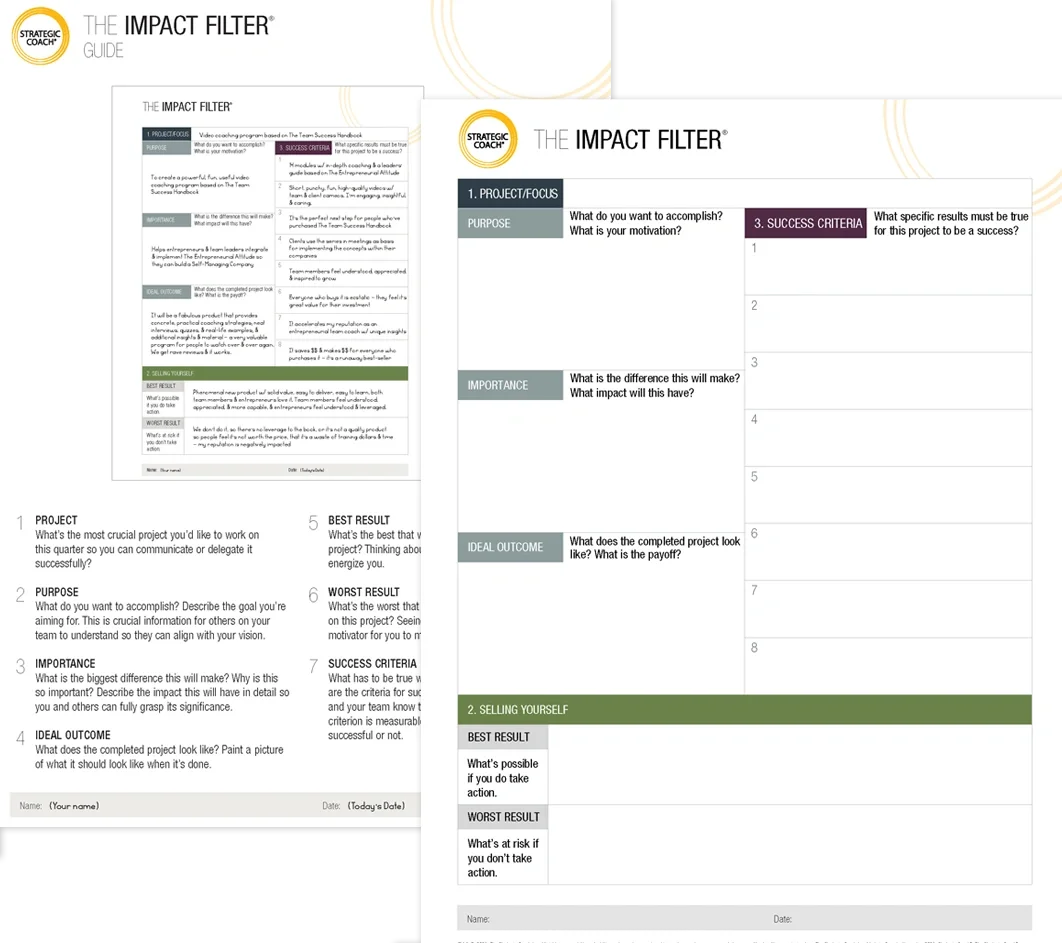
The Impact Filter®
Dan Sullivan’s #1 Thinking Tool
Are you tired of feeling overwhelmed by your goals? The Impact Filter is a powerful planning tool that can help you find clarity and focus. It’s a thinking process that filters out everything except the impact you want to have, and it’s the same tool that Dan Sullivan uses in every meeting.