Before You Invest, Ask “Who Actually Wants This?”
October 21, 2026
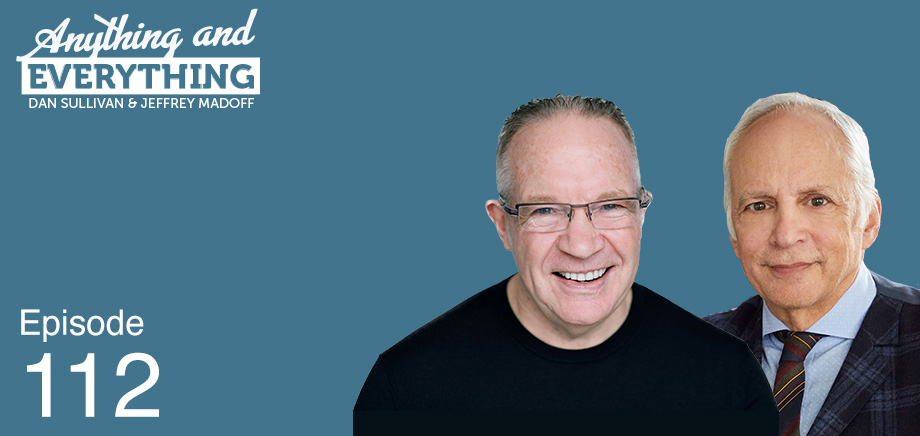
Hosted By
 Dan Sullivan
 Jeffrey Madoff
How do you tell a real opportunity from an expensive distraction? Dan Sullivan and Jeffrey Madoff explore why big ideas like Segway and Quibi fell short despite big-name backers and huge budgets, and explain how to look past the hype, ask better questions, and focus on what your customers actually want.
Show Notes:
Even in a good year, only a small share of IPOs turn out to be good investments.
Some investors aren’t betting that an idea will work—they’re betting they can get out before everyone else realizes it won’t.
Sometimes, the promise of what a product could do is easier to sell than something that already works.
Quibi had big names and plenty of money behind it, but it was solving a problem people didn’t have.
If you’re doing something new, there may not be credentials for it yet, but customers who keep paying you are a good sign.
The entertainment business is all guesses and bets, and past success doesn’t guarantee the next hit.
For every invention that takes off, there are plenty that don’t.
Sometimes, people try to sell you on who else has invested rather than on the idea itself.
A great demo gets people excited, but a lasting business needs customers who keep coming back.
Before you put your money in, ask who gets paid even if the idea doesn’t work.
Resources:
Most companies hire to fill jobs. The best leaders cast to build greatness. Casting Not Hiring offers a new way to build a team that performs together rather than a collection of people who simply function on their own. Order Casting Not Hiring now.
Learn more about Jeffrey Madoff
Dan Sullivan and Strategic Coach®
Episode Transcript
Jeffrey Madoff: This is Jeffrey Madoff, and welcome to our podcast called Anything And Everything with my partner, Dan Sullivan. 1999, somewhere a very confident man is explaining that this little two-wheeled scooter will redesign every city on earth. He believed it, and so did investors, and so did we. This week on Anything And Everything, we're walking through the graveyard of hype—Quibi, NFTs, the metaverse—billions of dollars, the smartest people in the room, all certain, all wrong. The question we keep circling back to is a quiet one: How do you tell a real revolution from an expensive mirage before it collapses? And then there's AI. Every one of those dead revolutions had brilliant people swearing it was different right up to the end. So maybe the real question isn't whether AI is the future, it's whether we'd even know it if it wasn't. So Dan, let's get into this and talk about the different kinds or species of hype and talk about some of the things that we have seen in terms of our experience. And before we started recording, you were saying, oh, this is a good topic for us. And you've quoted a percentage in terms of hype and businesses. So let's start off with where you come at this from, what direction.
Dan Sullivan: Yeah, well, my sense is it was the end of the year, and they were talking about IPOs. And they said that in a really good year, about 16 percent of IPOs actually turned out to be a good investment. I'd have to dig a little bit deeper in what a good investment is, but I think they're talking about exponentials, you know, where you really hit it. Back to a favorite topic of ours, there's a lot of people who have the kind of money that they can guess and bet with their money—they've covered rent, they've covered the food for the month and everything else. There's a thrill to be part of something that gives a huge return if you're early enough in the bet. And my sense, Jeff, is, and I've talked to a lot of people that they're not even guessing and betting on the new thing. They're guessing and betting on being early enough that other people don't know that it's not going to happen. It's a bit of a Ponzi scheme, you know. If they get their money in early, then they get paid off by the other people who bet, and then they get out fast enough that it's a good deal.
So my sense is that we're talking about two different creatures here. We're actually talking about inventions, but we're also talking about the entire process of betting money on possible inventions, you know. There's a whole industry that doesn't really care. And we've got an example of someone that we know who had created a great internet discussion. This is a platform, a discussion platform. This is, you know, 2000 … 17 or 18, and he could create an online conversation in a medical field where everybody could talk about what's going on in the medical field, and he could get 1,000 people on internet for a discussion. And it was really good, and he had an early AI component that could analyze the discussion and then create the topic for the next discussion. So it was a neat thing. Of course, fly today because there's all sorts of marketplace AI programs that do that. So it's not something.
But in 2017, it was a big deal. And I said, you should get that patented. I think it would be good if you just got a patent on that. And he went to Silicon Valley. He had an IP lawyer. And he was having a meeting with all the partners at the law firm, the IP law firm. And they said, how soon do you think you can have a prototype for this? He says, prototype? It's already working. He says, I've already had half a dozen discussions and everybody loves it. He says, it already exists? And he said, yeah. He says, well, that's going to be hard to sell. It didn't have enough pixie dust. Yeah, and it kind of told me, you know, I mean, you can think that's weird, but my sense is there's a whole other universe that's about investing, that the last thing you want to see is an actual working model, because how can you sell something that actually already works? But it's part of the guessing and betting universe.
Jeffrey Madoff: And that's part of the species of hype. You know, there's a few different species, which I think are interesting, and I want us to go into a couple of them in depth, which I think will be informative. One of the biggest problems, you know, obviously I want your opinion on this too, is the Segway had this problem and Google Glass—you remember Google Glasses.
Dan Sullivan: And Mark Zuckerberg just brought his latest out, AI Glass.
Jeffrey Madoff: And you know, the thing about it is, Quibi is a part of this, which we're gonna talk about, but they're solving a problem that nobody had. And that's what I found fascinating when I was doing some research and thinking, oh, that's really interesting. It wasn't solving a problem that needed to be solved. It was solving a problem, allegedly, but it was a problem that nobody had. Segway was a great example of that. A gyroscopic two-wheeled transporter that was going to redesign every city in terms of how people get around. And I didn't remember this, but it was 4,950 dollars. That was a lot of money for whatever the hell that was.
Dan Sullivan: Well, this was 20 years ago, right, 20 years ago?
Jeffrey Madoff: Almost 25 years ago, 2000.
Dan Sullivan: Yeah, 25 years ago, yeah, yeah.
Jeffrey Madoff: And that's not cheap.
Dan Sullivan: Not in those days. I mean, the inflation rate's been significant in the last 25 years.
Jeffrey Madoff: Right, true. Probably you're talking about 15,000 now, something like that. So the thing that was interesting is Segway started with, you know, Dean Kamen. He's the guy that created portable dialysis machines, portable insulin pumps, made a fortune licensing medical equipment that he created. I mean, brilliant man.
Dan Sullivan: Yep. Who was totally sold on. I've been at his house up in New Hampshire. I've actually.
Jeffrey Madoff: Oh yeah?
Dan Sullivan: Yeah. He's a legitimate inventor. He's a terrific person. He's got this program for high school students creating robots. And I think he's got up to a million now. Sixty countries. He's got this big Olympics of robot makers. I think he's probably produced more future robotologists just out of his educational program. He's a terrific guy, which kind of proves the point that it's kind of hard to know when it's something brand new, well, what credentials do you have to do this? And I said, well, if the credentials existed, this wouldn't be a new thing. Right?
Jeffrey Madoff: That's right. Seems logical, doesn't it?
Dan Sullivan: Yeah. Well, you come from an industry that's got its candidates for hype, you know, I mean, the entertainment business.
Jeffrey Madoff: Oh, yes.
Dan Sullivan: Plays, musicals, movies, TV series, and everything like that. These are all born and raised guesses and bets.
Jeffrey Madoff: Yeah, yeah. And the thing is, when you look through that lens, almost every new business is. And the interesting thing is, so first of all, Kamen had a great pedigree, brilliant person, and he put in over 100 million dollars over the course of 10 years into the Segway of his own money—not money he raised, his own money. And he was going through 500,000 dollars a month on his own. Kleiner Perkins, which is one of the heavyweights of the private equity companies, they were invested in it and Credit Suisse put in 38 million. And it had a ton of high-profile people. Steve Jobs called it as significant an invention as the PC. He wanted in for 60 million and came and turned him down because he didn't want to give up control. Jeff Bezos put in money. He called it reinventing the wheel, to Segway, and came and built a factory that could turn out 480,000 units a year. And the prediction of sales was 1 billion dollars in sales, faster than any company ever hit a billion dollars in sales. And the actual was not 480,000 units. They sold less than 30,000.
Dan Sullivan: Yeah. What was your take on it when it came out? I mean, this is long before our paths crossed.
Jeffrey Madoff: Well, that's right. Probably the first time I saw it was on the Johnny Carson show, and Kamen was interviewed, and Johnny wrote it around the stage. I mean, in terms of having your sails full of wind, they couldn't have been better than the people who wanted a piece of this, the people that invested in this, Kamen's own reputation, deservedly earned. So it was kind of amazing. The one thing I didn't check out is, who's gonna spend 5,000 dollars to stand up on a scooter? I mean, it sort of comes down to that. Who actually wants this? Turned out not so many people. When I saw it, I thought, well, you know, it's new, kind of looks goofy, you know, but I don't know. But I didn't see it as something that was, you know, I lived in New York. I didn't see people going up and down the sidewalks in New York. The only place I saw it in actuality being used was in some shopping malls. And I don't know that, you know, security people on Segways, I don't know that they would get there faster than somebody on foot. They would put less people at risk.
Dan Sullivan: It's not faster than a speeding bullet.
Jeffrey Madoff: No, it is not. They did that test.
Dan Sullivan: That's right.
Jeffrey Madoff: George Reeves was one of the first investors in the Segway. So it's kind of fascinating because here you have a company that's got a tremendous pedigree. The top names in the private equity world are clamoring to invest in it, as are the top people in the tech world like Jobs that want to get into this and Bezos that want to get into this. And they failed to ask, I think, a simple question is, well, who actually wants this? And what did they base their predictions on that they were going to sell 480,000 of these? It's like there was a company that I met with and they were coming out with, this was probably, I don't know, 8, 10 years ago. They were coming out with what looked like a really good smartphone. But there were already really good smartphones out there and some had came and went like, Blackberry. And before the Blackberry, even you remember the Palm Pilot. So when I saw the Segway, I thought, okay, it looks kind of goofy. I'm hearing this hype. I don't see it. I don't see it in the real world functioning. Not that I was any genius in envisioning the future. But hearing the story is one thing. Then you look at the thing itself, I don't get it.
Dan Sullivan: I think one of the factors for me is I'm not cutting edge with technology, period. You know, I'm not the first person to do it. And I didn't know anybody who had bought a Segway. And, you know, I'm plugged into a lot of entrepreneurs who try out things just for the heck of it. And nobody had a Segway. For example, a lot of people had Kindles. I remember Richard Rossi, our friend, was the first person who had Kindles. And then I was out with a client at dinner, downtown in New York, actually, but he lived off in Long Island. I said, where's your car? And he says, no, no, there's this new thing called Uber. And he says, watch, it'll be here in 15 minutes. And it was there in 15 minutes. Generally, my clients are enough of trying out new things that are unusual that I'll get four or five anecdotal stories. And I say, oh, that's really interesting. But it's not the way I make my money. We've primarily invested in our own company, and we have a growth model, and the return is good. So I tend not to invest in things where you don't have any control over what's being offered in the public. I mean, you're not part of the meetings, you're not part of the strategic meetings, so I tend to be very conservative. I like investing in things that we actually have control over.
Jeffrey Madoff: Well, and it also makes sense. I mean, I'm sure you've invested in things you don't have control over, but the idea that it's something you can envision and you have evidence that people will use it or want it.
Dan Sullivan: My big factor with the Segway is that everybody who rode them looked like dorks. I took a sophisticated, fashionable person, intelligent and everything, and made him look like a dork. And I said, gee, I just don't think you don't look good when you're on top of these. I mentioned I saw a police patrol and there were about six—this was in San Diego, there were six police officers and they had their helmets on, but they had short-sleeved shirts and they were wearing shorts. And I said, I think this must be a penalty. You guys, this is what you're going to have to do for about six hours. You're going to have to look like a dork as a cop downtown. I bet for every one thing that some human has invented that took off, there's a thousand that haven't taken off.
Jeffrey Madoff: Oh yeah, yeah, I think so too. When you think about at that time being on The Tonight Show and having Johnny Carson ride it around on stage and people applauding, I don't think that Steve Jobs was any household name at that point. And people outside of Silicon Valley who raised money didn't really know Kleiner Perkins, although they were a huge force in all of this. But ultimately there was a ton of money that went into building a product that they didn't ask the most basic question is, well, who's actually gonna buy this? You know, when you put together a prospectus for a business, you can make the numbers say whatever you want. You know, with Personality, we could do our largest theater, selling 100 percent of the tickets, every performance, doesn't mean that's actually gonna happen. You know, and that's the thing with this stuff. But I think we're going to see some patterns that emerge, but it's very interesting that investing in something because somebody else did, and you're afraid of missing out on that opportunity because you're sure to make money.
Dan Sullivan: Yeah, well, Bernie Madoff. Guaranteed, absolutely predictable 12 percent return. I said, boy, I don't know that much about the stock market, but I just said, how could that possibly happen? No, I can guarantee it'll be sunny weather for the next six weeks. There won't be any rain. We have no idea how the climate or how weather actually happens. And my sense is, I just don't know. But there were people who, first of all, they obviously had the money to waste, because that's basically what happened. I guess he was a convincing guy. And he had a track record. He was highly thought of in the investment world in New York City.
Jeffrey Madoff: Totally credible at the time before we knew what we now know. But yeah, so there was, I think, with Kamen, the pitch and the pedigree to go along with it. And I think that went a long way, and this is before social media, the all-out presence everywhere, on The Tonight Show, on the news, on 60 Minutes, on all of these kinds of things, without the basic question being asked. Do you remember Quibi?
Dan Sullivan: No.
Jeffrey Madoff: So Quibi is a fascinating story. Quibi, which was short for quick bites, and it was built on a simple premise. And that was that Hollywood quality video in chapters under 10 minutes made exclusively for your phone. Right? So it was to be watched in the in-between moments of the day. If you're waiting in line for coffee, if you're on the subway or the train going to work, waiting for a friend, whatever. And it was going to be huge, huge. So shares who started this off, Jeffrey Katzenberg, who ran Disney's anime. KKR, yeah. KKR is a different company.
Dan Sullivan: Oh no, KKR is an investment firm. Yeah, who are the other partners with Jeffrey Katzenberg?
Jeffrey Madoff: Now that you've popped that question, that popped right out of my mind. But yeah, there were other partners, but Katzenberg was the big dog with his Disney association. Because he went from Disney, then he co-founded DreamWorks. And by the way, Katzenberg was responsible for The Little Mermaid, Beauty and the Beast, The Lion King. There were not only huge film projects, there were Broadway theater. They were amazing profit machines. And he brought in Meg Whitman, and she was the CEO, former CEO of eBay. Former CEO of Hewlett-Packard, and even ran for governor in California, which is the Silicon Valley State. So you had an incredible combination of people, right? The ultimate Hollywood insider and a one-time California gubernatorial candidate who, you know, the founder myth that attracts smart money that stops people from asking the hard questions. So again, you've got a really strong group assembled and Quibi raised 1.75 billion dollars.
Dan Sullivan: Wow. That's a lot of money.
Jeffrey Madoff: Yes. By the way, to your earlier point, that was before it launched a single episode. They had one of the largest war chests any media company ever assembled. So those people behind it, that kind of money raised. And the striking thing about the cap table is it was not just venture capital, but every major studio invested in them. Disney, NBC Universal, Sony, Warner Media, Viacom, MGM, Lionsgate. All of those, and on the tech side, Alibaba was involved because it's benefited TikTok, and so was Goldman Sachs and JP Morgan. They were among the financial backers. All of this stuff. So it was never let out publicly how much each one invested and so on, but it's reported that there were two rounds, one of around a billion, another of 750 million. Again, all the credential people in the world that you would want, an all-star list. And the media company matters because you start thinking about …
Jeffrey Madoff: Reach.
Jeffrey Madoff: Exactly. Distribution, reach, all of that. So what were people really investing in? And part of this you have at Strategic Coach. You're investing at a place at the table with people who are movers and make things happen. And I think that when people try to sell you on who else is invested in it, as opposed to the thing itself …
Dan Sullivan: So there's a social status factor.
Jeffrey Madoff: Exactly, that's right.
Dan Sullivan: I'm sure they have parties.
Jeffrey Madoff: Yes, and I'm sure they rub elbows with each other, all those people in the room, absolutely.
Dan Sullivan: Well, we could go back to the tulip.
Jeffrey Madoff: That's right.
Dan Sullivan: Funny thing about the tulip one, it was ordinary people who got involved, because Holland, especially Amsterdam, was very sophisticated. I mean, it was perhaps one of the most sophisticated economic centers, you know, in the 1600s, 1700s. But apparently, the people who really knew about things didn't get involved, because what's the value? I mean, a tulip bulb. Actually, they weren't planning them. You wouldn't want to plant them. You would want to own the tulip bulbs, because it's the greater fool theory, you know, that if I bought it for this much, I can find a greater fool who will buy it for this much.
Jeffrey Madoff: Plus.
Dan Sullivan: Plus, yeah. But I think the big thing is a big return without any effort.
Jeffrey Madoff: That's right. That's right. And so what happened, it was really interesting in thinking about, so why would these companies invest? So I have a dear friend who was the CEO of AMC Networks. He now has his own company, but he was huge in building AMC. And basically, I'm gonna take a step back from here, but people invested in Warner Brothers and others paid him significant money to have a first look at the things that he thought he might be interested in. The old seat at the table, okay? So he explained that and he said, yeah, they're paying me really well just to take a look at what interests me. Now, he's responsible, by the way, for greenlighting Mad Men, Breaking Bad, The Walking Dead. You know, he's quite credentialed. Is he worth that? I don't know. If he has a breakout hit, he's worth it.
But these people, it's cheap insurance for them. What sounds like a lot to us, a few hundred million, is not a lot to them, you know, if that gets them a seat at the table. And so, because I was doing video at that time, all the time, the market they were after made some sense, but not a lot of sense. Because they also made it very native to phones. The idea was, you can watch this on your phone and you don't have to turn your phone. And by the way, they pre-sold 150 million dollars in advertising before they even launched. So, looked like they had validated demand, great people behind it, all of that sort of thing going for it. And then they launched on April 6th of 2020. So what happened then?
Dan Sullivan: Well, the thing is, people weren't standing in line, or getting on trains, or being at the airport.
Jeffrey Madoff: That's right. That's right.
Dan Sullivan: Yeah, well, that's bad luck.
Jeffrey Madoff: That's correct.
Dan Sullivan: Which happens. Bad luck is as likely to happen as good luck.
Jeffrey Madoff: That's right. So I think it's fascinating because everything was going through it. And by the way, they reportedly committed an order of a billion dollars of content. At premium rates, Steven Spielberg was involved, Guillermo del Toro was involved, Sam Raimi was involved.
Dan Sullivan: Steven Spielberg was with Jeffrey Katzenberg. So Spielberg was another partner. So there's more credibility for you.
Jeffrey Madoff: And then the stars who committed to doing projects, Idris Elba, Liam Hemsworth, Chrissy Teigert, Kevin Hart, Reese Witherspoon, Jennifer Lopez. And the theory was an A-list talent plus a novel format, the phone, equals a new habit. Problem was, just as you started laughing when you heard the date of their launch.
Dan Sullivan: I remember that date.
Jeffrey Madoff: Yeah, it was, you know, this is a product.
Dan Sullivan: That was during the three weeks when our entire future disappeared.
Jeffrey Madoff: That's correct. That's correct. And, you know, what was essentially their slogan? Watch it on the go. The go part left. You know, that wasn't a part of it anymore. So people were home on their couches. Now, they weren't traveling any place. And they made it, by the way, deliberately made it mobile only on purpose. Because that was the novel aspect that they would have programming on like anything else that's been seen, only get it this one way and it's from us. So you also, couldn't take a screenshot that you could then send to your friends, go onto social media. There was nothing to share on social media, so nothing could go viral. And nothing became a water cooler moment or a meme or anything else like that. And nothing worked because it got hit, blindsided.
But I don't think it would have worked anyhow because they made it so niche that they could never, I don't think ever have covered the costs that went into building up this company. And, you know, they had a beautiful demo tape, a demo thing, but look at the people involved, yet they could never get any traction once COVID hit. Couldn't have had a worse timing. So, they collapsed. They had 7 million subscribers in year one. And after free trial started expiring, there was a small fraction of that. And six months after the launch, they shut down totally.
Dan Sullivan: Yeah, they were burning cash.
Jeffrey Madoff: That's right. That's right.
Dan Sullivan: Jeff, one thing that I don't invest in is things that I don't do. Already before, what's the name of the product again? Quibi?
Jeffrey Madoff: Yes.
Dan Sullivan: I solved this problem when I was about six or seven years old. It's called a book. I was drafted right at the beginning of the Vietnam War, and we went to Fort Knox, Kentucky, and I discovered something, that a paperback fit perfectly in my fatigue pocket. There was no military rule that said you couldn't have a book in your fatigue pocket. So I actually read The Lord of the Rings at basic training. People would say, oh, you're a reader. And I said, yes. And I mouthed off to somebody, and he just floored me one day. He just knocked me down. I said, yeah. And if you're interested, I'll teach you how to read, too. And I got a fist in the face for it. So I had to be more discretionary. I said, yeah, I like reading. I heard there's a lot of waiting around when you're in the Army. But not one, not any of the sergeants or the officers ever said anything about the fact that I had a paperback in my fatigue pocket. So anyway, I tend to check it out, is this something that I would actually do?
And bringing it back to your project, Personality, you know, and you were very upfront about the fact, risky venture, you know, investing in a play like this. But it satisfied a long-time need that I'm interested enough theater that as an investor, I'd like to be part of a production. So I'm paying for a back stage view of how a musical is put together. For me, that's what the investment for is something I always wanted to be part of. But it wasn't that I thought it was going to make a million dollars or two million dollars. It's just that I'd never had the opportunity to be part of a bound-for-Broadway musical play. And this gave me a chance in Babs, too. We just wanted to be part of the journey.
Jeffrey Madoff: Which I'm grateful for. But, you know, I think when you look at most businesses and you see so many start-ups in terms of Strategic Coach, how many clients you have, the entry level, they can be a startup. I mean, they've got to have a more substantial business, I think, to afford joining at a certain point. But what's interesting is Quibi was not undone by a lack of money or expertise. They had that.
Dan Sullivan: Or publicity.
Jeffrey Madoff: That's right. It had more of those things than any start-up in history, quite possibly. But it was done because nobody asked the question, well, who actually wants this? I mean, I love your comment about the book. You know, you're carrying hours of entertainment in your pocket, you know? Try reading.
Dan Sullivan: They have a thing called a page. You can just fold it and it takes you right to where you left off last time.
Jeffrey Madoff: No kidding. Yeah, but what if the battery runs out?
Dan Sullivan: No, no. There's no battery? No, no. If you went hundreds of years without going back to it, it would be good when you went back to it.
Jeffrey Madoff: So this is the newest technology going you're talking about. This is clean energy too. You know, that's great. But you know, when the pedigree is so overwhelming that it seems like, you know, investing in it is a tremendous opportunity, and essentially how could it be of any risk? Look who's involved in this, who's already invested in this. And, you know, there was just the play, The Queen of Versailles, I think it was 24, 25 million. Tremendously talented cast, playwright, all of this. And I don't think it ran five weeks. I don't know. And these stories aren't uncommon. So I think it's really just quite fascinating. Why didn't this work? Who wants to see this? Who wants this product? Was anybody requesting? You know, it would really be great if we had a way to watch short content, short original content on the phone. Were you ever here, YouTube? You don't have to pay anything for that. And since that time, of course, TikTok. So why they would think that this would work and there was a demand for it. I mean, TikTok didn't exist yet at that point. But I think it's really fascinating because again, you're afraid of missing out on an opportunity that all of these other credentialed people are involved with.
Dan Sullivan: More and more I've been thinking about the word status. You know, a lot of turmoil creates in society when someone who didn't have status now has an opportunity to have status. And a lot of turmoil happens of somebody who they have status and they're losing it. I think it's like a nerve; the status nerve is I hadn't been so aware of it, but I've been following the democratic socialist movement. You're almost at ground zero of it in New York City with the mayor and three congressional nominees. And if you do a background check on them, they generally come from privileged positions. The mayor, certainly, I mean, he's got wealthy parents. They're credentialed parents. One of them is, I think, a university professor. The other one is a movie maker. But we're living at a time when there's a shift structurally, economically, especially technologically, where the predicted future for you based on education and based on credentials may not pay off. And it makes you mad that you were promised this and you're not getting it. And you go looking for who's to blame for this. And politicians are always a good target.
Jeffrey Madoff: Yeah.
Dan Sullivan: Or voters.
Jeffrey Madoff: And I think that, you know, it's interesting when you talk about status. I was with a good friend of mine and I was shopping. We needed a teapot. I was going to buy a teapot at Zabar's. So my friend Doug Fielding went with me and they had like 40 different teapots, you know, from low price of about 30 dollars or so, to you could spend like 450 on a teapot dollars. And I'm looking at these ones, which do I like, all that, and he goes, just remember something. I said, what's that? And he said, they all boil water. I've always found it interesting, and it's not something that I care to do, people advertise their status. They want you to see the Ferrari logo or the Mercedes logo on their car or the Armani or Ralph Lauren or whatever on their shirt. And things that are status, the billboards, you know, you're actually marketing for those companies, you know, when you do that. You know, people used to just wear those sandwich boards, you know, that were advertising something. Now all I have to do is wear that designer outfit out. So status is a really interesting thing because it's something you want to, I don't know whether you want to show it to others or say that, well, I'm a part of that too.
Dan Sullivan: Yeah, I think it may have been Tom Hanks, but it could have been somebody else. But he was at a certain point in his career, he was a valet driver at a wealthy hotel in Los Angeles, you know, probably Hollywood. He said, you know, just the top of the expensive cars showed up, Ferraris, Lamborghinis, Bentleys, Rolls Royce. And he said, you know, I did this for three or four years. And he said, I remember the cars. I don't remember the drivers. So whatever they thought that they were buying with an expensive car, it didn't work. But they probably weren't trying to impress the valet parking lot guys.
Jeffrey Madoff: No, there were others.
Dan Sullivan: There were others, yeah.
Jeffrey Madoff: There were others that they had. So are there any common threads in sort of what people invest in, where the hype, how the hype happens? And you actually mentioned something earlier I can't remember, I don't think we were recording yet. So if you can share the story about you not having the credentials and what you saw is the true credential.
Dan Sullivan: Yeah, I have a family member and he's very credentialed, you know, a doctorate in his particular field, university professor probably for about 25 to 30 years at a top-notch university. This is earlier in my days when just having enough money at the end of the month was a big achievement. And he said, well, what gives you the right to say you're an entrepreneurial coach? What's your degree? Do you have a degree for this? I mean, what have you studied? Where'd you go to school to learn this? You know, what's your credential? And I said, well, I don't know. People just keep sending me checks. You know, which used to come in a paper form. Now they come in a digital form. The whole point is that if you're doing something new, there can't be a credential for doing it because it doesn't exist yet.
The one thing I do notice is that in our Strategic Coach Program, which we're in our 37th year right now, that I can tell right at the early stages now when someone is in the very first year of our program, what the benchmark is, what the reward is for them. And there's a division. A lot of them are status entrepreneurs, and invariably, they became an entrepreneur because the amount of money you can make as an entrepreneur, if you're successful, is greater than you can make having a corporate job or a government job. But it's the amount of money and what they can buy with it, and the house that they can buy, and what neighborhood it's in, and what clubs do you get to join if you do that, and I noticed that it runs out at about 50 years old, about 55 years old. You have to have done it by the time you're 50, because it's actually what you do during your private time, not your business time, that's the most important thing.
That's one category, and the other one is growth. They're just into growth, that they like a challenge, they like putting together a new idea, to get into the marketplace and be successful with it. And then that allows them to do all sorts of things. But usually they're buying new capability inside the company. They're not buying status symbols outside the company. When I first started coaching, I couldn't tell the difference, but now I can usually spot it within the first meeting, what the goal is, because they start talking about their status symbols right off the bat.
Jeffrey Madoff: Yeah. I have heard those conversations many, many times. And somebody, you know, talking about the private plane that they just got. I mean, all these kind of things that for me, my interest in hearing about your acquisitions, I don't care, but a lot of people do.
Dan Sullivan: Yeah. And guess what? The economy depends upon all of them. So I don't have a …
Jeffrey Madoff: That's right. But the point though that I want to emphasize, because I think you're so right about it, in the discussion with your brother, and you know, while they keep sending me checks, hype is made in the demo stages. A business is made through retention. And if the customers aren't coming back again, when you're millions of subscribers is now, if you're building 480,000 Segways and you sell less than 30,000, not so good.
Dan Sullivan: You're in the warehouse business.
Jeffrey Madoff: Yes, that's right.
Dan Sullivan: That's another question is, what business are you in?
Jeffrey Madoff: That's right. And the other thing is that, what are the incentives for the investment? And there are people that profit from the story. And that could be the ad agency, the company that's hired to create the presentations, the people who raise certain amounts of money, who get money for raising money, all of those kinds of things, whether or not the thing works. So like in theater, right now for the past few years, both here and in London, own the theater. The theaters make money whether the shows fail or not. It's great when everybody involved makes money, but look at who's going to profit from this, who's asking you for what. The other thing is, do you remember Zerp, the zero interest rate policy? And that was essentially, you know, the free money that we had in this country for about 12, 14 years with how low interest rates were. And most of the 2010s is all Zerp money, and cheap money inflates everything. You know, it sounds good initially because it can flood in new money, but ultimately it isn't so good for the economy.
Dan Sullivan: Well, Subprime is a great example.
Jeffrey Madoff: That's right. Was that like 2008 when there was this?
Dan Sullivan: Well, the crash was halfway through 2008, and then it followed through into all of ‘09. Yeah. Yeah, they, Warren Buffett said, you don't know who's swimming nude until you see the tide go out.
Jeffrey Madoff: Yes. And I think there's another thing, which is if somebody is telling you either this is going to change the world, this time it's different, there are certain phrases you're going to hear that should raise one's skepticism.
Dan Sullivan: Yeah. You know, we're really seeing this with AI. I just noticed the number of negative articles that are appearing, say, aggregator, called Real Clear Politics. It's out of Chicago. They have about 10 different channels, you know, digital channels. They have a podcast channel. They have politics. They have policy. You know, it's based on ideas. They have market. They have world news. They have energy. They have technology. They have science. And it's just articles that they've aggregated from the day before or the last three or four days. And I'm just noticing you just get a feeling if you just look at the headlines and what made the cut for that day, you can see that there's a great deal of negativity towards AI right now on the social side, on the political side, and it's mostly based on that this is going to create miracles, and it didn't. And the other one is that this is going to get rid of all jobs, and it's not doing that. I believe in Moore's law, which has driven the digital revolution over the last 50 years, but I also believe in Newton's third law, that for every action, there's an opposite and equal reaction. But the big thing is that the big companies are not making money on AI. There's a lot of individuals who are doing really well. They're becoming more productive. They're becoming more efficient with AI, but it's not showing up at the people who spend all the money.
Jeffrey Madoff: Well, you know, where else it's not showing up in terms of increased productivity and so on, the data is not showing that yet. Because what we have been told in terms of, you know, the miraculous changes that AI will yield, and there are going to be things that are incredible results as a part of that, but the data is still not in in terms of AI increasing productivity greatly, that's not happening yet. Now, will it happen? I don't know, but that's a big thing now. And there's something that separates AI from Segways and another one, which I love because it's such total horseshit from day one, NFTs. What is this? And there were a few people again that allegedly made a lot of money. Whether they ever got the money or who, I have no idea. But NFTs was another thing. But what's interesting and unique about AI is it's not a particular product. It's like electricity or something.
Dan Sullivan: Well, it's like electricity or it's like pharmaceuticals. something that is clearly better, and you can demonstrate right off the bat that it's better. You know, it's like air travel. It took about 20, 30 years before it caught on, but it's very clearly that if it's reliable and it's safe and it's not too expensive, that it's a great breakthrough.
Jeffrey Madoff: I saw Come Fly With Me, this fascinating documentary. Did you see that? There's a fascinating documentary about air travel, which I had never thought about before and why they had stewards. The stewards were essentially like nurses in a sense that their whole purpose was to keep people comfortable, because initial commercial airline flights, they didn't go above 10,000 feet. So every shift in the wind and everything else was knocking people around, getting them nauseous, they're throwing up. And if you flew across country, it was a really unpleasant experience. And they were there to comfort and provide services and so on. What is funny, people felt like shit, but it was a status thing to have flown somewhere. Even though when they got off the plane, they're like, you know, they're a mess.
Dan Sullivan: My way of feeling like shit is superior to yours.
Jeffrey Madoff: That's right. Thanks for joining us today on our show, Anything And Everything. If you enjoyed it, please share it with a friend. For more about me and my work, visit acreativecareer.com and madoffproductions.com. To learn more about Dan and Strategic Coach, visit strategiccoach.com.
Related Content

The Impact Filter®
Dan Sullivan’s #1 Thinking Tool
Are you tired of feeling overwhelmed by your goals? The Impact Filter is a powerful planning tool that can help you find clarity and focus. It’s a thinking process that filters out everything except the impact you want to have, and it’s the same tool that Dan Sullivan uses in every meeting.