We Used To Do This Together
October 06, 2026
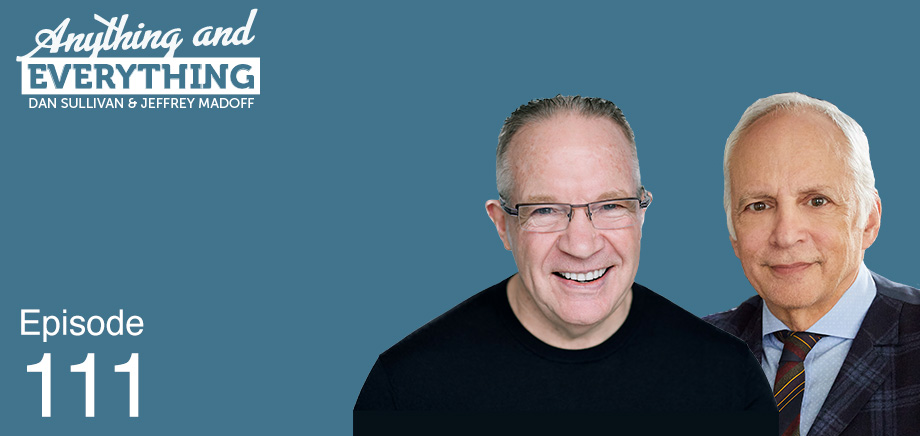
Hosted By
 Dan Sullivan
 Jeffrey Madoff
Most companies hire to fill jobs. The best leaders cast to build greatness. Drawing on Dan Sullivan’s decades of coaching entrepreneurs and Jeffrey Madoff’s experience as a director, producer, and creative leader, Casting Not Hiring offers a new way to build a team that performs together rather than a collection of people who simply function on their own. Order Casting Not Hiring now.
Activities that were once inherently social in the 1950s and ’60s have become much more solitary. Dan Sullivan and Jeffrey Madoff discuss the changes, technological and otherwise, that have altered the way we work, play, and socialize.
Show Notes:
In the mid-to-late-20th century, you generally had to go somewhere and deal with someone in person if you wanted to do something.
Over the decades, technological advances didn't just make our lives more efficient. They progressively automated, individualized, and digitized tasks that used to require a community to get done.
The attitude of the marketplace is: if they’re going to do it, we’re going to make it easier for them to do it.
TV was called the window on the world and the vast wasteland, and both of those statements were true.
Thanks to targeted ads and content suggestions, where you used to be the observer and the spectator, you're becoming almost the subject of the activity.
The difference between how much viewer research is being done now compared to the 1950s is enormous.
Audiences are so splintered now that TV can't aggregate the kind of viewer numbers they used to be able to.
The introduction of credit cards allowed people to live beyond their means, which caused other kinds of problems.
Resources:
Learn more about Jeffrey Madoff
Dan Sullivan and Strategic Coach®
Episode Transcript
Jeffrey Madoff: This is Jeffrey Madoff, and welcome to our podcast called Anything And Everything with my partner, Dan Sullivan. Dan and I are gonna talk about something that not only touches us, I think it touches all of you. And that's about activities that used to be social activities in the ‘50s, ‘60s, and ‘70s. They're not really social activities anymore. And we're gonna look at technological changes and things that either changed the way we work, changed the way we play, or changed the way we socialized. Because the mid to late 20th century relied really heavily on being there, physical presence and shared spaces. And if you wanted to do something, you usually had to go somewhere and look someone in the eye to do it. And then over the decades, technological advances just didn't make our lives more efficient. They progressively automated and individualized and digitized tasks that used to require a community to get done. So we're going to look at about 10 activities, roughly, of things that changed all of these things for us. And I was wondering, Dan, the lives didn't just make us more efficient; there are things that we lost and there was cost to those things too. Do you remember when you were growing up what the first big shift was in terms of how time was spent?
Dan Sullivan: Yeah. Probably family dinner moved in front of the television set.
Jeffrey Madoff: Wow. And that family dinner was how many people in your case?
Dan Sullivan: Well, when that came in, there would be a mother and father, seven kids, nine at the table. This would be like 1953, because I used to have to set the table and do the dishes, and that was one of my house jobs in those days. So that would be ’52. I'd be eight years old, nine years old. My job was to set the table, and then at a certain point, probably maybe once a week or so, but I noticed more and more, and then of course they started creating TV dinners. If they're gonna do it, we're gonna make it easy for them to do it. That's the marketplace. I would say that is the most noticeable one, just on a quick review of my childhood.
Jeffrey Madoff: It's funny, because for younger listeners, TV dinner was actually a brand name. It wasn't like Swanson TV dinners. Swanson. And so it was literally like an aluminum tray with compartments. It would have mashed potatoes and then a piece of meat of some sort. Soggy vegetables. Green beans.
Dan Sullivan: Probably had a lot of gravy. Gravy was the way that you could forgive a lot of sins in those days.
Jeffrey Madoff: That's right. And did you have the little TV tables?
Dan Sullivan: Yeah, they were fold-up tables. Yeah, but I remember, I mean, looking back, because I have very distinct memories of being with the family eating, and then I have very distinct memories that everybody's in the living room watching TV.
Jeffrey Madoff: And did everybody in your neighborhood have a TV or was your home somewhat novel for having one?
Dan Sullivan: No, no. I think we were late. I think it was probably, we were at least a year late. We had a small farm, but there was a big farm. They had like 700 acres and there was three families. There was the parents and one family and another family. They had three houses, but I remember they all got TV earlier than we did. And most of my classmates at school who mostly lived in towns, the farm kids were a minority. So that's one of the big changes I noticed. And the other big one was home deliveries like milk. Well, in our case, we lived next to a dairy farm, so I was the one who went over and got the milk. You didn't go to the store for milk. Milk was delivered to you. That was a big change.
Jeffrey Madoff: They had a milkman.
Dan Sullivan: Yeah, they had a milkman. And they had, like, eggs and cottage cheese and that sort of thing.
Jeffrey Madoff: I'm curious about the TV. With television, what was the change? What do you think was the impact?
Dan Sullivan: Before TV, you were doing something with your evenings, and you were doing something on weekends, and then after a while, you were watching TV. That's all I remember. I remember The Big Top on Saturday mornings.
Jeffrey Madoff: I remember that show, yes.
Dan Sullivan: It was like a circus, and then weekdays, you had, like, Arthur Godfrey was one of the big shows. Don't know when it exactly came in, but Saturday night was a big night. Jackie Gleason was on The Honeymooners, was the big one. And Amos and Andy was on, who were two white guys in blackface. Well, I don't think they were when they went to TV, but I think when they started out radio …
Jeffrey Madoff: Sherman and Gosden, I believe, were their nicknames. When they got to TV, they actually had wonderful comedic actors. But it's interesting because I think one of the things that was so significant about television is shared experience. When we got a bit older and were working, it was, as they called it, the water cooler discussion.
Dan Sullivan: And you were all watching the same TV programs.
Jeffrey Madoff: Yeah.
Dan Sullivan: Yeah.
Jeffrey Madoff: So there was a common experience that we shared and the aggregation of audience numbers as TV got more popular, you know, was huge. There'd be watching Ed Sullivan, it would be between 35 and 70 million people. So when Ed Sullivan, the most popular and influential variety show on TV, that introduced The Beatles to the world, that introduced Elvis to the world, And there's, by the way, a very good documentary about Ed Sullivan. He was an interesting guy. But I think shared experience was something that was really important because that led to discussion. Could be about news events. I mean, I remember, you know, we would watch Walter Cronkite. And when Walter Cronkite turned against the Vietnam War, President Nixon said, you know, we lost Cronkite. We're going to lose the United States.
Dan Sullivan: No, that was LBJ said that.
Jeffrey Madoff: Oh, right. Okay. Yes. Yes.
Dan Sullivan: LBJ was the president when it was the Tato offensive.
Jeffrey Madoff: And thank you. Yes.
Dan Sullivan: And then he decided to quit. You know, he didn't run again.
Jeffrey Madoff: Right. Right. And that's all television impact, because that was the first war we watched at home.
Dan Sullivan: Mm hmm. The other big character, and my mom really watched this, was Edward R. Murrow. A lot of these had been World War II correspondents. Cronkite was World War II, Edward R. Murrow was World War II. These people had established their reputations during the ‘40s, and then when television …
Dan Sullivan. They already had authority when they came on board. Yeah, because of radio.
Jeffrey Madoff: Yeah, that's right. And sort of a sidebar is that I was hired to produce and direct a documentary about Brooke Astor, who was the cornerstone of New York philanthropy. The Citizens Committee of New York hired me, and I met Brooke before I was going to shoot with her. She actually walks into her office and says, her hello was, I'm in a foul mood and you'll get nothing from me today. So I thought, this is off to a good start.
Dan Sullivan: Well, she gave you the context.
That's right. That's right. It's always good to give context. You're right. And she was fabulous.
Dan Sullivan: She was amazing. She's what, great-great-grandchild of the Astor family? Because they're 1820s, and I think they're very early, the Astors.
Jeffrey Madoff: Well, Astor Place in New York.
Dan Sullivan: Yeah, yeah. John Jacob Astor, I think it was.
Jeffrey Madoff: I think she married John Jacob Astor's maybe grandson?
Dan Sullivan: Mm-hmm. That'd be right.
Jeffrey Madoff: I'm not positive, but something like that.
Dan Sullivan: But they were the dominant family in the late 1800s, the Astors were.
Jeffrey Madoff: Yes. I think he was a beaver trader, if I'm not mistaken.
Dan Sullivan: That would be right.
Jeffrey Madoff: And so Brooke was amazing. But what was fantastic is, I'm sitting in my office and I get a phone call and my office manager comes and said, Jeff, Walter Cronkite's on the phone for you. What? And this is the kind of guy he was. I got to meet him a few times and, you know, I think it's really hard for people today to understand that someone who carried the responsibility and the weight of being a trusted voice, and he didn't take that lightly. And he said to me that he had been asked to introduce my film. And he said, I hope that you understand that I can't do this without first seeing it and making sure that I'm comfortable with representing it. And he said, this is nothing personal. And I said, no, Mr. Cronkite—Walter. And I said, well, Walter, I completely understand.
And of course, and I, my messenger sent him a three-quarter inch tape. And he called me back, you know, within an hour, and said, I'd be proud to introduce your film. It's a fine piece of documentary journalism. And he was a very nice man—surprisingly, by the way, not that tall. You know, he had such a looming big presence, but the impact that he had on news, like Edward R. Murrow—I remember watching, my parents would watch You Are There, which was very innovative for its time, that they would interview scientists and entertainers and all of that in their home, and Murrow would be in the studio watching it on his screen. I mean, it was crazy.
Dan Sullivan: [smoking impression]
Jeffrey Madoff: Smoking nonstop. That's right. That's right.
Dan Sullivan: That's a social change.
Jeffrey Madoff: That's right. And so I think there were positives to TV, you know, the window on the world and the vast wasteland. Both of those statements were true, you know, even though they were contradictory. And I think the television gave us another campfire to sit around and watch and tell stories from.
Dan Sullivan: Yeah, you mentioned something in introducing this, and I think if there's a pattern with technological change, it more and more zeroes in just on the individual. Like, if you think of the choice that you have today of what you want to zero in on, and then they're watching you, they're observing you, what you're choosing, what you're avoiding, and they're gearing the content more and more for just you, because they have the technology to do it. They can tell. If you look up an ad, you get five ads like it that are sort of similar to the ad. So I think that where you were the observer and the spectator, you're becoming almost the subject of the activity. They're watching how they can connect with you and sell you something. It's all about selling.
Jeffrey Madoff: Well, so it started with Nielsen.
Dan Sullivan: When did that start, ‘40s, ‘50s? When did Nielsen start?
Jeffrey Madoff: It started actually with radio. So I believe it started in the ‘40s. And I had a really wonderful time with Frank Stanton, who was second to William Paley at CBS and one of the founders of CBS. But he had before that worked at Nielsen Rating Service. And looking back, it's extraordinary to think that way back then, in the ‘50s, that the decision to spend billions of dollars on appearing in a certain program as an advertiser was gauged by a cylinder that was in the radio and then the TV that, when you would change the channel, it had a piece of wire and it would deepen the groove and then they would approximate which was the network that was closest to that groove and what did that represent. And they extrapolated from very few households. And this was true up until not all that long ago. I mean, probably the ‘80s or something, which to me doesn't seem that far away. But these decisions were being made on so little information. I mean, it was crazy.
Dan Sullivan: I mean, even with political polling today, there's not many that they're …
Jeffrey Madoff: Well, I think you're right. And the lack of accuracy in many of the polls underscores that.
Dan Sullivan: Yeah, yeah. Well, I think part of the problem is, is there a certain type of person who just doesn't watch television or they don't answer the phone? What they want is people they can get a hold of really fast and get an answer to. But yeah, I mean, there would be a real change since the 1950s with how much research is being done now compared to research back then.
Jeffrey Madoff: Yeah, I wonder how much that has clearly it has not been effective at discerning and predicting the outcomes of elections, you know, no matter how seemingly sophisticated it has gotten. And, you know, so they're doing polls of the polls and subtracting from either side and all these calculations and algorithms. But the accuracy still isn't all that high.
Dan Sullivan: No.
Jeffrey Madoff: Which is interesting that it's still that poor a predictor. But I think that in our lifetimes, yours and my lifetimes, I think that the introduction to television was an astoundingly amazing event that retained power for many, many decades. And there have been things that have challenged that dominance. And I think these last few years, those challenges have taken their toll. Television is not what it used to be. And I'm not talking about quality; I'm just talking about you can't aggregate—they can aggravate, but they can't aggregate the kind of viewer numbers that there used to be when we were growing up, that the audiences are so splintered.
Dan Sullivan: Yeah, you can see that with the controversy over Jimmy Kimmel and Colbert. They were talking in the single-digit millions per night. If you go back to Jack Parr and Johnny Carson, you're talking 30, 40 million. But that was the splintering of channels. I think Jack Parr was definitely when there were three channels, maybe four channels when he started.
Jeffrey Madoff: Yeah, I think that's right. So two things happened at the beginning of television, which is interesting, is that initially there were many companies, RCA being one of them, which thought the money was in selling televisions. That's where you made the money. And then Milton Berle, the comedian who had an extremely popular show—it was called Mr. Television—and they claimed, whether it's true or not, I have no idea, I suspect, but it doesn't make any difference, that he sold more TVs than anybody with his popularity. That's sort of what unleashed the mass audience. But the real insight, I think, that came from television is that when something appears to be free, you're the product. So they were selling their audience to advertisers. And even though the accuracy of the data that they were drawing from was pretty shaky at best, that held on for, what, 60 years before it really was challenged by cable and streaming and all of that sort of thing. So it's fascinating. But I think that one of the results of that is also how splintered the audiences became. Because, you know, you and I are coming up to three or four channels. Now there's so many places to get whatever the hell it is you want, whether it's movies or commentary or whatever. So I think it's fascinating.
Dan Sullivan: Yeah, I think another big social change is before television, we went to a lot of movies.
Jeffrey Madoff: Mm-hmm.
Dan Sullivan: Yeah. I mean, you go to a movie a week. First of all, the movie theater would have double bills. They'd be showing two movies. And a couple of cartoons. And cartoons, yeah. And then there were serials on the movies. Weekly, you would get your 15 minutes a week and then that's how the Lone Ranger, Gene Autry—they started as serials.
Jeffrey Madoff: Yeah, and ending with the term—I always loved the origin of certain terms and phrases. The hero is knocked off his horse in the cowboy movie and holding on as a bad guy is coming to the edge of the cliff. And it was the cliffhanger that would get you to tune back in. So the hero would be in danger at the end of the episode.
Dan Sullivan: And then at the next week, they'd give you a little repeat of the last minute or two minutes to get you back in touch with it, yeah. But there was a lot of that. The other thing about it is that radio was still big. And I remember coming home and listening to Sky King, Sergeant Preston of the Yukon. Those were afternoon slots. And then I think radio, when television came in, that type of radio more or less stopped, I think. Or they switch to television, the same shows switch to television.
Jeffrey Madoff: Okay, trivia question for you. Sergeant Preston of the Yukon, what was his dog's name?
Dan Sullivan: King.
Jeffrey Madoff: Yeah, Yukon King, that's right. Yukon King. Why I remember this shit, I have no idea. But yes, Yukon King, and his name was Sky King. I think that was through marriage. And then wasn't his daughter was Penny wasn't it?
Dan Sullivan: Yeah, I think it was Penny. Yeah, and it was sponsored by Ovaltine
Jeffrey Madoff: Ovaltine was some of the worst tasting crap. Did you ever have Ovaltine?
Dan Sullivan: Oh yeah, loved it. Then you could get your Ovaltine shaker and you put the Ovaltine in, it's a powder, and you put the powder in and the milk, then you shake it. You would do it when the show was going. You'd show your devotion and participation by actually using the product when you were listening to the show. It was a nice merger, because you were getting the sponsor, but you were also getting the program at the same time. It was good stuff.
Jeffrey Madoff: What kind of name is that, Ovaltine?
Dan Sullivan: I'd have to look that one up. You're making me thirsty here. I don't know if Whole Foods actually carries Ovaltine or not.
Jeffrey Madoff: Yeah, and I'm actually switched out of the Ovaltine department to the Geritol department. So, you know, you mentioned also I mean, aside from TV being a communal event, when new music came out, and this was more into the late ‘50s and early ‘60s, it became a social event when a new record would come out. And then you'd go and have a listening party.
Dan Sullivan: New 45s came out, yeah. Yeah, well, you know, you and I were born in the heartbeat of America because rock and roll was attributed to Alan Freed.
Jeffrey Madoff: Out of Cleveland.
Dan Sullivan: Yeah. And Rock and Roll Hall of Fame is there. And that was the big, huge thing that for the first time, and you reflect that in your play, Personality, that the market for records became teenagers.
Jeffrey Madoff: Right.
Dan Sullivan: Children and teenagers. That was a huge shift.
Jeffrey Madoff: Yeah, I mean, I'm sure in your house, like most people's houses in the ‘40s and early ‘50s, that the record player…
Dan Sullivan: 78s. Then they had 33s.
Jeffrey Madoff: The extended plays. And, you know, it was a big piece of furniture. There weren't the portable record players.
Dan Sullivan: And you could break the records. You had to watch out. What was the substance? It was like a hard brittle plastic.
Jeffrey Madoff: Yes. Yeah.
Dan Sullivan: Yes. Bakonate or bac …
Jeffrey Madoff: You're thinking of Bakelite, but no, the records weren't made of that. But radios were and a lot of kitchen stuff was. But it's interesting because a big shift that happened in music actually is before the Internet. The big shift was the Walkman, which came out in ‘79. And I was actually part of the first group when I met with Carol Morita, who was the chairman of Sony at the time, and quite a visionary. And I was there shooting the French fashion collections. I was awarded this contract when I was shooting. This was in Paris.
Dan Sullivan: You were in Paris.
Jeffrey Madoff: That's right. So all these people that, they didn't call them influencers, but that's kind of what they were looking for, models, and I was literally on the back of a motorcycle going from one show to the next so I could make it in terms of directing, because I had crews going all over Paris, which was quite fascinating. But everybody's wearing headphones. And it was the Walkman. And that was really the shift where the listener was isolated, just listening themselves through headphones. And then it fully culminated with Apple and the MP3 players and that sort of thing. And then phones, which essentially became the player for you. And all of a sudden, those listening parties, the excitement of a new album release and all of that went out the window. It became highly individualized and isolated how we heard music.
This past year, I was actually with this guy yesterday. He opens up on the 18th, actually, of this month, a used record store. I'm actually selling him part of my collection. And a really nice guy, 32 years old, who was in private equity, and he decided he just couldn't do it anymore. This was something that he loved. And so we went, Jake and I, my son, we went to his store, which isn't open yet, but he let us in and saw what he was doing. And it was really cool. And he said that vinyl sales this past year surpassed a billion dollars. Now, it's still a small part of the industry, but vinyl growth has been very steady and big for the past several years. Because if you remember when a new Beatles album had come out, or Led Zeppelin, or whatever, you looked at the cover art, there were the liner notes, and it was a whole social thing which went away. And going to the record store, it was, you know, for me, I go to record stores and bookstores. I got to know the people that work there. And they would say, oh, you got to hear this. You'd love this. And it was a thing. It was a social thing. It was nice.
Dan Sullivan: I'll give you another example: catalogs. Like the Sears and Roebuck Christmas catalog. What went along with catalogs was layaway plans.
Jeffrey Madoff: You know, the layaway actually started with F.W. Woolworth. I like the term. You know, my parents and their stores, they had to lay away because layaway. What does it mean to lay away? We're going to lay this away until you pay for it. Yeah, which predates the credit card. And I don't think the stores charged any premium for layaway. It's just you could retrieve whatever it is you bought once you paid for the whole thing. Isn't that right?
Dan Sullivan: Well, premium, they were getting your cash early, you know what I mean? You were paying and paying and paying until you hit a certain number where you could actually get the product. They were using your money. I mean, when you buy a Starbucks card, let's say you put a hundred dollars into your Starbucks card. I bet, first of all, they have the money a long time before you have the coffee. But the other thing about it is most people, I bet 40 percent of those type of cards are never utilized. It's like free money for the companies.
Jeffrey Madoff: But I have to believe that banks, so I don't know that the stores charge beyond the price. I don't think—they didn't charge you a layaway fee. I think you just, when you paid it off, you got it. You just had to make regular payments. But credit cards came in and started charging usurious numbers, but you could buy on credit. So you could really get into debt. And I think that credit cards were also a huge shift, but that also allowed many people to live beyond their means, which caused other kinds of problems. But you mentioned the movie theaters. I mean, when we were growing up, neighborhood movie theaters and drive-in movies were huge. Then later, it became, you know, the ritual of going to a video rental store and looking through the titles and all of that and browsing the aisles, you know, on a Friday night to find the movies that you wanted to watch for the weekend. And instead of going to the movie theater where you would see people from the area and whatever, that became something you did at home. You know, seeing the movie at home, not seeing the movie in a movie theater.
Dan Sullivan: Here's one—I did it, but I don't know if you did it, was bubblegum cards.
Jeffrey Madoff: You mean like baseball cards?
Dan Sullivan: Baseball cards, yeah.
Jeffrey Madoff: You know what I remember more than anything about that is the smell of the bubblegum. Were you heavy into collecting baseball cards?
Dan Sullivan: Yeah. I mean, I participated. I don't know if I ever got into the competitiveness of it, that you had this card. But you know who's really big into this is Becca. She and her boyfriend are big, big collectors. We're talking about transactions that are $5,000 to $10,000. It's all done on the internet. Do you have this card? Everything like that. No, the things that I didn't save that would be valuable today. I'm not a saver.
Jeffrey Madoff: Yeah. I mean, I've got two trunks of comic books from the ‘60s.
Dan Sullivan: That's a big thing. Comic books. Yeah. And you went to the store, all the comic books that were in the store. I think they were monthly, weren't they, comic books?
Jeffrey Madoff: Yeah. Yeah.
Dan Sullivan: Steve Canyon. Remember Steve Canyon?
Jeffrey Madoff: Yeah.
Dan Sullivan: Well, you had the Sunday comics. That was the lead in was the Sunday comics. Then you had the comics every day. Newspapers were a big deal. Newspapers have just gone away.
Jeffrey Madoff: Yeah. And the comics I remember on The Akron Beacon Journal, the Sunday Funnies. Separate section. Which was very cool. But, you know, it's interesting because …
Dan Sullivan: Terry and the Pirates.
Jeffrey Madoff: Yes. Little Abner.
Dan Sullivan: Yeah. Dick Tracy.
Jeffrey Madoff: Yeah. Dick Tracy had an Apple Watch, you know, 70 years before Apple invented it.
Dan Sullivan: Yeah.
Jeffrey Madoff: So it's interesting, because the shift that happened in the movie business, I mean, the movie watching business, where people were no longer, where attendance was probably just basically high school kids going to the malls to go to theaters just to get out of the house. But the loss of the adult traffic into theaters has greatly diminished the theater-going population, people that will go out to see shows, that home theater became a big deal. And I still think there's something great about sharing an event with other people. Or, you know, the crowd at the theater is laughing or surprised or horrified or, you know, whatever. And I think that that's another loss in terms of socializing, that is, to me, not positive. Because again, people used to get together and do those things. And I think that another thing that I think is interesting was—this is a big deal in Akron, I don't know if it was where you were—bowling leagues were huge in the ‘50s and ‘60s. Huge.
Dan Sullivan: Well, it was a job, too. You could be a pin spider. Yes.
Jeffrey Madoff: Pin setter.
Dan Sullivan: Yes. Pin setter. Yeah. It was dangerous, too. You had to get above the ball coming through because those bowling pins were really heavy and they could really, really sting you when they came in.
Jeffrey Madoff: Yeah. And bowling has come back as a whole different kind of a thing where in New York City, which I think is a pain in the ass, you don't pay by the game. You pay by the hour. And many of them now have, first of all, become very expensive and they have like, good food. And they're like, party places. But I don't think people realize how big bowling was at that time. And that was a huge thing that got people together and they were sponsored by local businesses always.
Dan Sullivan: Yeah. If I remember correctly, Ohio was a real hot center of bowling.
Jeffrey Madoff: That's right.
Dan Sullivan: I think Akron and Canton was like a really, in the United States, the Ohio bowling was a big deal.
Jeffrey Madoff: My dad was asked, because at that time—this was before how they oiled the lanes and people having six different bowling balls depending on the lane oil composition, all this stuff. My dad carried like a 193 average. And plus he's a fun guy and all that, and they wanted him to go on the national bowling tour, which he said no. He had his business. He wasn't gonna do that. But making friends at the bowling league, and I bowled in Saturday morning leagues, was a whole thing that just, again, doesn't happen. And those leagues were sponsored not just by local businesses, by churches and synagogues, and it was a whole community thing, which is kind of gone. But there's another thing that we all have done that has to do with our money directly, that also, I think, changed things greatly. And that was depositing money and cashing checks in the automatic tellers. I mean, I used to know my banker. I have no idea of any of them. I try to avoid going into bank.
Dan Sullivan: I can't remember the last time I was. I think it was when I got a new credit card, but I think they bypassed that step, too. But I remember I had a charity that I gave money to, but you couldn't get off of it. I did a monthly charity in Toronto, and you couldn't stop it. You'd say, I'd like to stop it, and they said, you can't stop it. And I called the credit card company and they said, you need to get a new credit card. It's the only way to stop it. So I did. And I went in and a person helped me and I put in my new PIN number and everything. But you had to do it in a branch of the bank. We have big banks in Canada. Do you know the story of why you didn't have big national banks in the United States? Do you know the story of that?
Jeffrey Madoff: No.
Dan Sullivan: It had to do with Bank of America. And Bank of America was started in the Italian immigrant community in San Francisco, I think, and then it went all through California. And he just gave free credit cards. He just sent out free credit cards, tens of thousands of them, and people started using it. And a bunch of people got to Congress and they said, you can't have branches across state lines. But they blocked it from going across state lines. The banks couldn't have branches. Yeah, it's an interesting period of history because in Canada the banks are national and they're huge, like Bank of Montreal, TD Bank, you know, they'd have easily, the smallest would have 800 branches. They got five big ones, you know. They have 90 percent of all the mortgages in Canada are the banks. But credit cards, I mean, we didn't have, you had cash, you know, there was, that was the only way you could get anything done. Do you have a memory of when you wrote your first check?
Jeffrey Madoff: I think that I wrote my first check … interesting question. I think I wrote my first check when I was a freshman in college. So that would have been late ‘60s, right?
Dan Sullivan: ’67.
Jeffrey Madoff: And that's why it was funny, when I was in high school, I took a home ec course.
Dan Sullivan: Me too. Very valuable. Very valuable.
Jeffrey Madoff: Very valuable. And same thing I did with typing too.
Dan Sullivan: Gives you for marrying the wrong woman. Because you're getting married because she's got home ec skills.
Jeffrey Madoff: And I remember first day of school, and the teacher who knew me took me and said, “Why are you in this class?” “What do you mean?” She said, “Well, you should be in all college prep courses. Why are you taking this?” I said, “Well, I don't know how to balance a checkbook. I'm going away to college next year. I got to know this stuff.” And, you know, it was like, if you were just going to be a housewife, you know, I didn't grow up with housewife mother. So anyhow, that was when I learned in high school how to balance the checkbook. And then I opened my first checking account freshman year of college.
Dan Sullivan: Double entry bookkeeping. It's a very valuable skill.
Jeffrey Madoff: Yeah, it was. That's correct. I think the first check I wrote was for, I think it's for school books.
Dan Sullivan: Yeah, I'm pretty sure it was when I left home. I remember having savings accounts at the bank and everything, but I don't remember having that checking account.
Jeffrey Madoff: Yeah, I did. And so, you know, when you think about when we were growing up and, you know, you went to the bank and you interacted with the teller and you made a cash deposit, you gave the cash to the teller. We also weren't behind inch thick plexiglass and all of that. I think they smoked back then. Well, the thing about it is that with the automatic tellers, you still had to go to the bank. But now when I deposit a check, I just take a picture of it. And so banks, now their function is totally different. People they have in the bank is to basically sell you mortgages and home improvement shit and …
Dan Sullivan: Give you a loan.
Jeffrey Madoff: Yeah, that's right. Which is where the money is for them at this point. So the nature of banking, another kind of community enterprise out the window. But I also think there was something else I was reminded of. I was just watching the opening to some documentary about this adult film star who had a show on cable TV in New York called Robin Bird.
Dan Sullivan: Female or male?
Jeffrey Madoff: Male. And you know, it was funny because she did a lawsuit so she could get on the air because it was public access, and anyhow it was kind of funny, but they had a montage that was from way back then of what Times Square looked like and all of that and there were places like Playland, which they were so cool. I mean, it was gritty, but it was like pinball arcades and ski ball arcades and they'd sell candy by the quarter pound and they were open ‘till three in the morning. And it's like Midnight Cowboy, that kind of, but Times Square was like that.
Dan Sullivan: I remember Times Square in the seventies. It was pretty gritty.
Jeffrey Madoff: Yes, it was. And that's when I moved here. I was coming there. It started coming here in the late ‘60s. But the pinball parlors in the ‘60s and the arcade centers, they were like major social hubs where people would meet.
Dan Sullivan: Yeah.
Jeffrey Madoff: And, you know, home video consoles, the Atari and Sony PlayStation, all that kind of stuff wiped out that whole market. And then now it's, you know, guys sitting in their basements, you know, playing video games. A lot more sophisticated, but again, it wasn't a group activity anymore. It was a solo activity.
Dan Sullivan: Well, first of all, it's a very useful thing actually having a memory.
Jeffrey Madoff: I can't remember whether it is or not, but yeah.
Dan Sullivan: And then to actually use your memory to check out differences between then and now. I enjoyed this. I enjoyed this very much. Me too.
Jeffrey Madoff: Thanks for joining us today on our show, Anything And Everything. If you enjoyed it, please share it with a friend. For more about me and my work, visit acreativecareer.com and madoffproductions.com. To learn more about Dan and Strategic Coach, visit strategiccoach.com.
Related Content



The Impact Filter®
Dan Sullivan’s #1 Thinking Tool
Are you tired of feeling overwhelmed by your goals? The Impact Filter is a powerful planning tool that can help you find clarity and focus. It’s a thinking process that filters out everything except the impact you want to have, and it’s the same tool that Dan Sullivan uses in every meeting.