Why Progress Falls Short Of The Promise
September 22, 2026
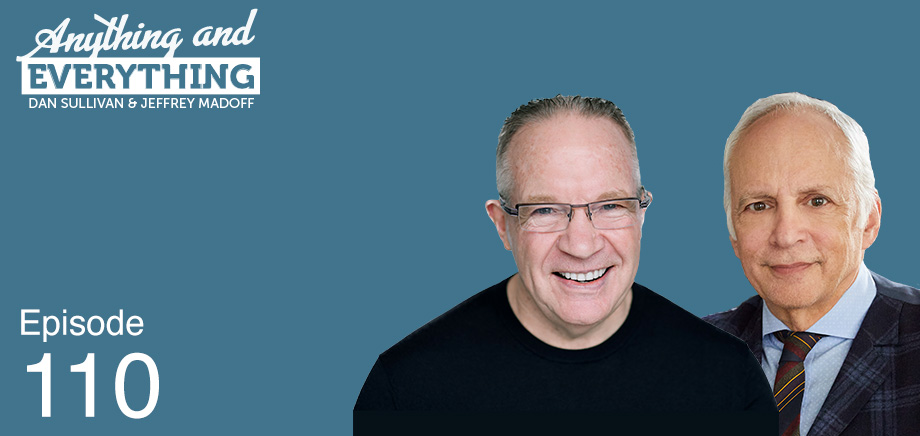
Hosted By
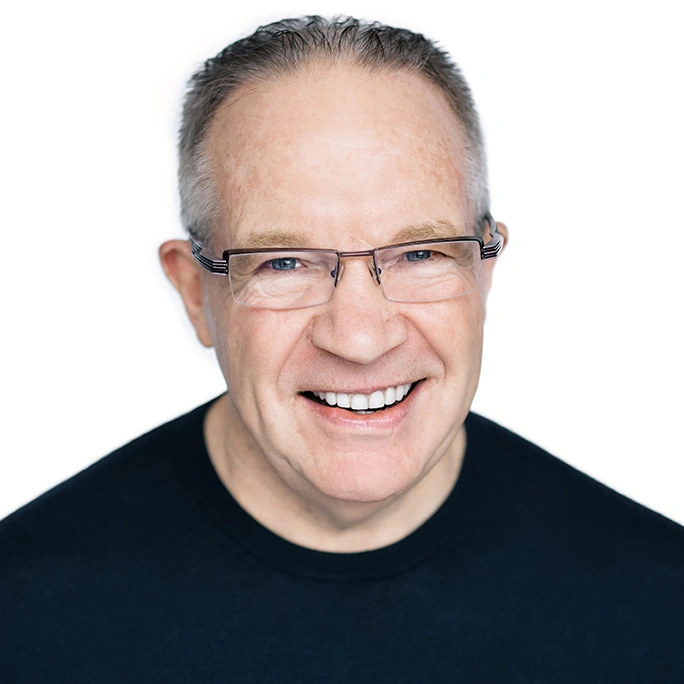 Dan Sullivan
 Jeffrey Madoff
Most companies hire to fill jobs. The best leaders cast to build greatness. Drawing on Dan Sullivan’s decades of coaching entrepreneurs and Jeffrey Madoff’s experience as a director, producer, and creative leader, Casting Not Hiring offers a new way to build a team that performs together rather than a collection of people who simply function on their own. Order Casting Not Hiring now.
AI may seem ubiquitous, but most people are still in the early stages of figuring out how it can create practical advantages in their lives and businesses. Dan Sullivan and Jeffrey Madoff discuss the gap between a new technology’s initial promise and its real-world results, using AI and electric vehicles as examples.
Show Notes:
When a new technology enters the marketplace, customers aren’t interested in everything it can do; they’re interested in how it relates to what they’re already doing.
Users of a technology are often less interested in its creators’ vision than in how it can benefit them personally.
Once people become aware of a new technology, they look for ways it can give them a short-term advantage.
Tremendous amounts of money have been invested in the electric vehicle industry, but it hasn’t yet delivered on its initial promise.
When the full production cycle of an electric vehicle is considered, it may be no more energy-efficient or less polluting than other cars.
The stock market’s way of measuring productivity doesn’t account for the changes taking place in the small-business market.
The United States hasn’t reduced its dependence on foreign oil and may be as vulnerable as it was 50 years ago.
The U.S. is now the world’s largest energy exporter.
Resources:
Guessing & Betting Confidence by Dan Sullivan
Casting Not Hiring by Dan Sullivan and Jeffrey Madoff
The 4 Freedoms That Motivate Successful Entrepreneurs
Learn more about Jeffrey Madoff
Dan Sullivan and Strategic Coach®
Episode Transcript
Jeffrey Madoff: This is Jeffrey Madoff, and welcome to our podcast called Anything And Everything with my partner, Dan Sullivan.
Dan Sullivan: The anything that we've been talking a lot about over the last couple of years has been AI. And what I noticed is that most people, when a new technology is introduced into the marketplace, they're not interested in everything. They're just interested in something that relates to what they're already doing. And most people don't want to completely change what has been successful so far, but they see where the new thing actually is interesting and allowing them to do things faster, easier, better, bigger, and that's all they're really interested in. They're not really interested in what the creators of the new technology are interested in. They're only interested in, how can this be an advantage for me in the short term?
Jeffrey Madoff: Yeah, and I think that there's also a lot of things we don't understand yet, haven't come to fruition yet, but also running a certain path that we've seen before, which is that the first phase is creating awareness and the second phase is hype and what that hype does and how it heightens the profile of that entity. And, you know, one could say that electric cars have gone through that and they haven't yet reached—and it's questionable if they will, but they haven't yet reached the initial promise that was set forth. And tremendous amounts have been spent on it.
Dan Sullivan: Yeah. How would you characterize what the early promise was?
Jeffrey Madoff: For AI?
Dan Sullivan: No, for EVs.
Jeffrey Madoff: That it would cut down on pollution, on dependence on Middle Eastern oil and make a clean source of energy that would be more economical and efficient and not tied to like, what we've been going through, Middle Eastern politics and so on. So I think it was all of those things that seemed to be good, but clearly hasn't. It's funny, I remember back in the ‘70s when it was at least the first Middle East oil crisis affecting gasoline prices, and how the prices went so high at that time. I don't remember the numbers for sure, but they were ridiculously lower than they are now, like 69 cents a gallon or 89 cents a gallon, and then they went up during times of political turmoil in the Middle East. And one of the things that it makes me think about is we're still in the same position in terms of that vulnerability. We're still in that position now, the same thing that I was looking at 50 years ago. So we haven't diminished our dependence on foreign oil. And even though the United States has become one of the primary sources for it, it's still that tremendous expense, the Straits of Hormuz and that being blocked. And I know most of the oil is going to China. But the point is that we're arguably in the same position of vulnerability that we were in 50 years ago. Nothing really changed.
Dan Sullivan: Yeah, I think other countries are. I think the U.S. is essentially independent now. The fracking technology that came in right around 2000, 2005, the U.S. doesn't really depend upon long-term contracts with the Middle East. It has long-term contracts, but these were the fact that the contracts were in place and they had to keep importing oil, but the U.S. is basically free from that.
Jeffrey Madoff: Except clearly it still greatly affects our and the global economy even though we are in a sense independent.
Dan Sullivan: Yeah, we're the largest exporter of energy now.
Jeffrey Madoff: Right, but what I'm saying though is that clearly we've been through a period where there has been highly increased prices for barrels of oil and we aren't away from the dependence. Even if we have our own energy independence, that doesn't protect us from the economic jolts that it goes along the way.
Dan Sullivan: One of the big things that's been discovering is that there was way more reserves that were stored away this time than there was in the ‘70s. Basically, people had enormous amount of reserves of oil in preparation for something like this that wasn't true in the 1970s.
Jeffrey Madoff: Right. But it's still there's a pretty profound economic impact on it as a result.
Dan Sullivan: Yeah. But in the last couple of weeks, the price of gasoline in the United States has gone down by 60 cents, you know, which is a big issue. And there's an incredibly more energy efficiency now than there was 50 years ago. We just use a lot less energy to get things done compared with how it was in the 1970s.
Jeffrey Madoff: Yeah, I remember what cars then were getting like 9 to 12 miles a gallon in the ‘50s and ‘60s. And the size of cars has also been reduced, which helps also the efficiency.
Dan Sullivan: Well, the electric vehicles, first of all, it's found that if you take it from the entire production cycle of an electric vehicle—in other words, where all the materials come to create a battery and everything, it actually doesn't make any difference from the way that internal combustion machines. The EVs are no more energy-efficient and they're no more non-polluting than other cars. They've now more or less taken the entire production cycle and they've actually, interestingly, cost just as much. But it was a big deal, and it was a big political issue, it was a big moral issue, and it's proven, not really, that it makes that much of a difference.
Jeffrey Madoff: You mean the difference between a gas-powered or electric vehicle?
Dan Sullivan: Yeah, yeah. But none of the stuff that Al Gore was predicting came true.
Jeffrey Madoff: Well, I think there's whole new renewed interest in global warming and what's going on now. I was talking to friends in Paris where …
Dan Sullivan: It's hot.
Jeffrey Madoff: Yeah, extremely hot, and in London. And you know, a lot of these places, unlike here, don't have air conditioning.
Dan Sullivan: Yeah.
Jeffrey Madoff: It's interesting because the main thing is, to go back to where you had posed the question, within the framework of what we're talking about, and that framework being technological advance, there was first the awareness, then tremendous promise, which hasn't yet to be lived up to. And I think that AI is in the same position as that. And that AI debt, as of 2025, is 1.2 trillion, and it's the biggest sector in investment-grade bond indexes.
Dan Sullivan: This has been what has been invested, but no return.
Jeffrey Madoff: Correct. That's right. I don't know the reasons for it yet. I only know what he said being interviewed, Sam Altman, in OpenAI, but they're going to hold back now on their IPO, which again is another big competition. You know, who's going to have the biggest IPO, which now is, of course, SpaceX. But I think that a lot of the promise that we should have been seeing already hasn't been happening yet. The surge of efficiency and productivity isn't there yet, and it hasn't shown up yet. And it remains to be seen. I think the interesting thing that applies to our audience of entrepreneurs is, most of the businesses are small enough to feel much more profound impact earlier because they are treating it as a tool and can implement it quicker. Do you agree with that?
Dan Sullivan: Yeah, I think that's true, and my sense also is that the way the stock market measures changes, like productivity changes would be the big one, they don't have any feel for the small business market whatsoever. They have certain big corporations that they look at, you know, it's like the Dow Jones or it's the Standard & Poor, but actually the economy is made up of millions and millions and millions of small businesses, And they're not getting any information from these small businesses about productivity increases. But the productivity increases are happening in the 2,500 companies that we have in Strategic Coach. We can see, I mean, it's anecdotal. We're not doing scientific research here. But anecdotally, people are saying, I'm saving enormous amounts of time myself as the owner of the company seeing that all my team members are now using technology to get things that used to take three weeks to get done. They're now doing it in the matter of a couple of days. They're getting stuff. So I think the productivity changes are happening, but I think it's invisible because we don't care about the overall economy. None of us do.
Jeffrey Madoff: We do if it affects our business. And I think that, you know, that's the big question is, what is the effect? I don't have a lot of faith in people's ability to self-assess, whether it's their level of productivity or efficiency or so on. I think that that's a great place for confirmation bias, and you look for things that give you those indications. I just think that, you know, it's interesting, and with the debt that has occurred, that exists currently, there are some of these economists that are saying this is just like what's happened with subprime—incredible bond investment, and now we don't know whether it's gonna have the same bad outcome. We don't know that. I would be curious as to why Altman decided to put off the IPO, which they were looking for big time not too long ago.
Dan Sullivan: I think it's because, first of all, they've just gone through the biggest IPO in the history of the world. And the money that might have been available for them has already been committed to another IPO. I don't think anyone expected the SpaceX IPO. I mean, we're talking about trillions of dollars, not invested, but this is going to be available for our IPO. And I think it was just an extraordinary IPO.
Jeffrey Madoff: It was, but I think it'll be interesting to see if Anthropic changes their plan, because Anthropic blew past OpenAI in terms of the evaluation of the company. So it's a really interesting, really competitive
Dan Sullivan: You know what it is? It's a lot of guesses and bets.
Jeffrey Madoff: No, you're kidding.
Dan Sullivan: Yeah, I think it's a lot of guesses and bets. And one of the big guesses and bets is how much money can we get out of the government. And Anthropic got off to a bad start with the government.
Jeffrey Madoff: Right.
Dan Sullivan: Their lobbyists weren't as good as other people's lobbyists were. I don't know that much about them. You know, just a little note here of flexibility. Perplexity now has a dropdown on their site that if you want to use another app, you just drop down. So for the last month, I've been using Cloud 4.6, which I find a much better writing application than Perplexity. So I think a lot of things like that are happening. Perplexity is not a major player, but they seem to be more flexible than the other platforms. They say, we'll just take you, as long as you come through Perplexity, which you've paid for, we'll give you access to other apps.
Jeffrey Madoff: You know, I think it's sort of like your streaming providers. in New York at Spectrum. If you go with Spectrum, we're going to give you Hulu, Disney+, Apple TV, and Netflix. It's the same thing.
Dan Sullivan: Yeah, that's what I'm saying. It follows previous introductions of a new technology. We know what we're going to do for the next three days, but we don't know what the week after next looks like.
Jeffrey Madoff: That's right. That's right.
Dan Sullivan: And I have a suspicion they're not getting a lot of sleep.
Jeffrey Madoff: Yeah, I mean, it's interesting.
Dan Sullivan: Well, the stakes are so high.
Jeffrey Madoff: Yeah. So high. And it's interesting because when we started talking last week, what had captured my interest was, you know, the response to the wheel and that whole thing. In doing that research, I wanted to see, so how many people are actually being laid off because of AI? Because that's one of the things, the dystopian aspects of it that we hear about. And AI cited layoffs were less than 4.5 percent of job cuts in 2025. And the net effect of that number, because it's kind of, was that actually AI or was that some other inefficiency or whatever? The point is, we haven't been seeing not only the increases, but also the job eliminations, fortunately, haven't happened either. And I think that that's interesting. And I was mentioning the productivity is that experienced developers were 19 percent slower with AI. And this is through testing and trials that they were slower with AI while believing they were 20 percent faster.
And the interesting thing about that is that's why. In so many things, you know, it's like when somebody says the average is X, okay, well, what are you drawing that average from? And I think that, again, the self-assessment, for instance, with AI, even if you're that human in the loop that's looking, do far, it hasn't been shown that coding is any faster, because you have to check the coding at this point, because AI still hallucinates a lot. And you can't afford to have that done with any kind of codes that you're implementing. So when you add in the time that it takes to both monitor, then correct and recode, I'm not saying the improvements won't come. I'm just saying they aren't there yet. And that surge in productivity nor the surge of layoffs hasn't happened. But I think people have a tendency to consider all layoffs are now AI because we've been hearing so much about AI in the last two years. And they're not. There's no evidence to that. So it's just kind of fascinating. And again, that's to your point. Historically, this has happened before.
Dan Sullivan: Yeah, and the big thing is that humans are not, what I would say, a predictable element in that. And what I mean by that, for example, we had 120 team members two years ago and we have 120 team members now. And it's not the same. I mean, we've had movement. We've had people who left and we've had people who've come. But we're still hiring this year. You know, we're hiring new people. And the message has gone out, and I think that people are very, very conscious that there's now automation that could take part of what you're doing and automate it. I think people are very, very aware. One of the problems of statistics is that humans are not going to change. In other words, we have a notion of who humans were two years ago, and they haven't changed. Well, they're picking up the messages and they're altering their behavior. In terms of our tool for Casting Not Hiring, people are being more alert, they're being more curious, they're being more responsive because they understand that a general movement in the marketplace is eliminating jobs where people just want to show up at nine o'clock and work till five and they don't want to change and people are changing.
Jeffrey Madoff: When you say people are changing, I mean …
Dan Sullivan: I'm just talking about my own company, that people are very aware of AI.
Jeffrey Madoff: Yeah, hard not to be at this point.
Dan Sullivan: Yeah, yeah, yeah. But humans change. Humans play chicken with the future. How long can I get away with just doing what I've always been doing?
Jeffrey Madoff: Right. Because at least on the surface, it doesn't cost anymore. There's the, of course, opportunity cost and all of that. But yeah, I mean, nobody's in a rush to renovate their business, so to speak. So the longer you can put off the spend, as long as it doesn't hurt you or take you out of the competitive realm, which I remember years ago, this was back in the early ‘80s. And I had an appointment with this guy from Panasonic. He came up and he says, I've come here to show you the future. Okay.
Dan Sullivan: That's good.
Jeffrey Madoff: Thanks.
Dan Sullivan: Yeah. Which in fact doesn't exist. The one thing I've noticed about the future is nobody's been there.
Jeffrey Madoff: That's right.
Jeffrey Madoff: And so he takes out what looks like a silver LP record. And he goes, this is the future. Do you know what this is? And I said, yes, it's a Laserdisc. And he said, this is the future. I mean, at best, it's the future for now, but that's not going to last very long. And I always said, well, this will be the way to distribute instead of reels of film and all this kind of stuff. That had a really short life, the LaserDisc, and then it went to DVDs, which were about a quarter of the size, less money to mail, all of that. And I have to hand it to Netflix, because they started off with giving you an envelope to send the DVDs back to make it easier than having to go to a Blockbuster store. But everybody that's presented the future, and this is what the future is going to look like, certainly hasn't nailed it yet in all these different iterations. So I was doing a job. This is the story I actually wanted to mention.
Dan Sullivan: These are great stories because the industry that you were involved with actually went through profound changes. And you seem to have done okay. I mean, since I've known you, which is more than a decade now, and we've been having, I mean, more recently, but we would have lunches and we would have breakfast and we would talk before we weren't actually project based because we've been working on projects for the last couple of years. But you seem to always be alert to something that might be handy if I stopped doing it this way and started doing it that way. But I wouldn't say that your main identity of yourself is you're someone who's always taking advantage of new technological changes. What you were doing is creating value for your clients with whatever was available.
Jeffrey Madoff: Yeah. You know, if I was using a rock to pound a nail and then somebody showed me a hammer, I'd say, oh yeah, this works. I would take that and not use the rock anymore.
Dan Sullivan: Yeah.
Jeffrey Madoff: You know, but with the creative director of this ad agency and I shot the job already, there were two things that happened before getting a job. First of all, in terms of the shooting of the job, they said, are you going to use the red camera? And I said, depending on how we design this job, figure out which is the best tool to use. And I think that what you want, we need to originate this on film. And this was back in the early ‘90s, I think. Anyhow. So then it was also in now, are you using Avid for editing? Avid was the first of non-linear editing systems. So it made editing video kind of like using word processing. And you can edit image and sound separately if you wanted. Anyhow, they said, well, we heard that the Avid is really good. And I said, the Avid's just another tool. It's an editing tool. He says, yeah, but we've heard that's really good. We heard that the Red, this was a separate conversation, we heard that the Red was really good. Those two major technological shifts that had happened. And I said, let me ask you a question. If I do this job, deliver it on time, on budget, and you love the work, what do you care what tool I use? Well, we heard that that's really good. They said, no, the thing that has to be really good is the person using the tool.
Dan Sullivan: And what the final product looked like.
Jeffrey Madoff: That's right.
Dan Sullivan: And did it cost what I told you it was going to cost?
Jeffrey Madoff: Right.
Jeffrey Madoff: So if you like it, I deliver it on time, on budget, what do you care? And then you realize that there are some people that just want bragging rights of being the first one to be using that application or whatever. And they don't really know anything. And it just becomes, well, you know, we didn't do our first job with the Red. And I think that happens in so many things. And I think AI is a great example of that.
Dan Sullivan: The interesting thing is, do you know the name F.A. Hayek? Economist, 1950s, and his whole point was that the knowledge that actually makes the world work is generally implicit knowledge. You put a team together, like one of the things that you've talked about a lot is that you put teams together of people because a lot of your projects, essentially a new company you put together, and there were a dozen people or a half a dozen people that you know that would just deliver what you needed for the teamwork. And so you give them a call on putting a project together and doing that. But what you were betting on was these people are really flexible. They know what changes are taking in terms of their skill and their talent. And I'm just going to bring them into the team because they're great for the team. But this didn't have anything to do with technology. It had to do with human beings that you could count on. And you knew they were doing their homework when you weren't with them, so that they'd show up with all the necessary new knowledge that was necessary to get it done according to the plan that you were putting together.
Jeffrey Madoff: That's right, that's right. And you know, whether you're doing, whether I was doing a play or a film production.
Dan Sullivan: Production, yeah. It's a new company. Every project's a new company that you're putting together, but you didn't start by thinking what technology we're gonna use.
Jeffrey Madoff: That's right.
Dan Sullivan: You're talking about, what human skill are we going to use?
Jeffrey Madoff: Right. That's right. You know, I want Vilmos Zygmund, who's one of the greatest cinematographers of all time, and he's gonna choose the camera. You know, why would I hire someone like that then handcuff them? And I would cast people based on what I believe their talents to be. And, you know, one of my mantras is you find good people through other good people. And when those people deliver and deliver again. To me, I had the people that I would go to and if they weren't available, they were also the kind of person, because they knew that I wasn't looking to eliminate them, they just weren't available, they would recommend people. And I got a number of wonderful people that I've worked with on all different levels of business through the people that I had already used. And so that built up a network of talent. And you're absolutely right. It's the person first. And if you're going to hire me because of what I do, then let me do that.
Dan Sullivan: Now, just take the example of your productions, which go back 50 years, and multiply that by 10 billion times, that's how the world works. That's the exponential, is that people who are really good at what they're doing have tricks, they have shortcuts, they have workarounds, they have phone calls they know they can make and they've just solved a big problem. But none of this is measurable.
Jeffrey Madoff: Exactly. And I think that's what's so interesting because it's not, oh, we got this great new AI platform that can fill your sales pipeline automatically. And what I care about is the work. How am I going to execute on the promise I'm making to this client? Because my thing was always, you do what you do to not just make the money, but to get hired again. And the more you build that relationship, the more freedom you have within that relationship because you've established trust over the years.
Dan Sullivan: Yeah. Yeah. Let's give Jeff Madoff a call and just tell him what we want and how he does it. We don't know, but Jeff always comes through. That's the kind of guess and bet that really makes the world work.
Jeffrey Madoff: Well, you're right. And I'm very proud of the fact, you know, Ralph Lauren was a client for like 37 years. I never had a contract.
Dan Sullivan: You never had a written contract.
Jeffrey Madoff: Well, that's right.
Dan Sullivan: Yeah. He had a contract, but it wasn't …
Jeffrey Madoff: No, you're right. That's right.
Dan Sullivan: Yeah. There's contracts and then there's real contracts.
Jeffrey Madoff: That's right. And at one point he had said to me, you know, I can afford to hire whoever I want, but I want you to do this.
Dan Sullivan: That sounds like a contract.
Jeffrey Madoff: Yeah. Well, that's right. That's what made me think of that because to me it was the same thing. I honored that and I never took it for granted. Never took it for granted. And I think that, that's the thing with our Casting Not Hiring, is having the right people in the room. Those are the things that are so hard to measure.
Dan Sullivan: Yeah.
Jeffrey Madoff: I mean, you know, there are things that are successful that the people hated each other who were doing it, but I don't want to live that way. And I have run into, but fortunately been able to dodge almost all of them. You know that I was hired by this company, Gottex, it was one of the largest swimwear companies. And I had done their shows for three years, and they hired a new designer, and we were gonna be doing the show, and the designer wanted to meet with me, and I went, and he said, “I know what I want.” I said, “Okay, what is it you want?” And he said, “I want a one camera switch shoot”. And I said, “Well, the operative term in that is switched. That means that you have to have a minimum of two cameras because you're switching from one to another. So the minimum number of cameras you can use to have a switch shoot is two.”
“Don't tell me what to do. You don't tell me what to do. I'm telling you what I want. You're just trying to sell me another camera. You're trying to up the cost on all that.” And I said, “Randolph, time out a second.” And he looks at me and I said, “We're off to a bad start. And this is not a situation that I sense is going to get any better. You should hire somebody you trust, because you don't trust me. And I'm an adult and I'm not going to stand here and listen to you yelling at me and accusing me of things. So just find somebody else to do it.” And I turned to Levi, I said, “Where are you going?” And he said, “We're done. I'm leaving.” And he said, “You can't quit.” I said, “Watch.” And I walked out.
Dan Sullivan: Yeah, yeah. I'll take this back 2,000 years to the marketplace in Rome. That's how it worked in Rome 2,000 years ago. I'll take you 2,000 years into the future, and that's how it works then.
Jeffrey Madoff: That's right, because it's people.
Dan Sullivan: It's people.
Jeffrey Madoff: That's right. And I did, just to give you the follow-up, I got a call back from the president of the company, who's a good man. And he said, “I heard you met with Randolph.” I said, yeah, and he goes, “You don't need to explain anything. I'm sorry, and we made a mistake, and it's a three-year contract worth of mistake. But I really want you to do the show.” And I said, “I can't work with him. It's not worth it to me.” And anyhow, they ended up breaking the contract, suing him. He was a half-page article in The New York Times business section for abusing his staff. Doesn't work. And I just learned really early when it starts off like that, don't even try to correct it.
Dan Sullivan: You know why? Because you were the buyer.
Jeffrey Madoff: And explain what you mean by that.
Dan Sullivan: Well, one of the things we strive for, you know—you've been striving for it for half a century, I've been striving for it for half a century—is that we only like working with the people we like working with. And that doesn't matter what the check is, doesn't matter what it is, is you have a notion of what the right cooperative setting is. And he just proved to you that it wasn't going to work with him. So you're the buyer. You're the one who can walk. He couldn't walk. You could walk.
Jeffrey Madoff: Mm-hmm. Yeah, now, I don't know, by the way, if he had somebody he has worked with in the past and wanted to work with them, but the Gottliebs who owned Gottex wanted to work with me. I don't know what it was, but that's not the way to do it. I'm being paid to do a job, not to take abuse and to put up with bad behavior. It's just, you know, not willing to do it. I've never been willing to do it.
Dan Sullivan: Yeah. I think we've just established a universal that you can predict.
Jeffrey Madoff: Which is?
Dan Sullivan: Well, you have enough experience that you can predict working with the wrong person is not going to work.
Jeffrey Madoff: Right.
Dan Sullivan: And not worth it.
Jeffrey Madoff: Yeah. Because if you think, well, I'm getting paid a lot, I'll just do that. I've had conversations with people who, yeah. It's really interesting because people are very good at, and I'm not, by the way, saying I'm right. I'm right for me. You know, there are other people that figure, you know something, I've got an impermeable wall between myself and a client like that. I'm happy to take their money and deliver them. And to me, it's never that simple.
Jeffrey Madoff: For you.
Dan Sullivan: For me, that's what I'm saying.
Jeffrey Madoff: That's right.
Dan Sullivan: For me. Is it worth it? It isn't worth it. And also, I think along with that, I was confident enough that I could always book other work. So why would I put up with that kind of behavior? And I do think that people in business and in life create their own monsters that they feel they have to give into. And with people like that, it's never just giving in on that one thing. That's the way they are about everything.
Jeffrey Madoff: Yep. You know, and if I said, okay, I'll do a one camera shoot for you, which is impossible. You know, it just, it would never get better. It would, I would only resent being there. So I removed myself from the equation. Has that happened to you?
Dan Sullivan: Oh, yeah. Oh, yeah. You know, my big thing, for example, in the early part when we weren't known at all, going to business conferences where I was one of a list of 20 different people that they were going to have there. And I did it. You know, I did it. It required travel. They said, it's just for an hour. You just have to put on your presentation for an hour. And this is what the deal is. I said, well, it's not one hour. It's five days. A day flying is a day. And if I'm doing that, I'm not doing anything else. And you say, is this really worth it? In the early days, it was worth it. It was worth it. And then at a certain point, we have other means of acquiring customers that doesn't require me speaking. I haven't spoken on stage for 10 years at somebody's conference. And the reason is we had developed our own marketing means, we have our own sales team, they have relationships, they have networks, and we know it's producing the results, so I don't need to take advantage of this experience.
Yeah, and I think this really matters because we have a concept for our entrepreneurial clients and for ourselves that you have Four Freedoms that you want to increase: Freedom of Time, that you say what your time is going to be used. Freedom of Money: you have a certain discretion about how you like making your money. Freedom of Relationship: you only work with who you like to work. And Freedom of Purpose, that basically this corresponds to what really contributes to our purpose. And if there's a violation of any one of the four, then I say, I don't know if I want to do this. It's an increase of discretion, what I would call it. You get a great sense of discretion about what you want to do and who you want to do it with.
Jeffrey Madoff: And I think it's also part of that discretion is also determining what's the risk factor here. How bad is this going to be? You know, and it's that sort of thing. And when you aren't dealing with, you know, there are issues that while I was doing production, there's certainly issues where I wish that there were people that work out their issues in therapy, not on the set. That would be a lot better for everybody.
Dan Sullivan: Yeah, I mean, you've told me some great stories about where you were acquiring cast members for the production. Essentially, you were casting for the production. And somebody's just going to be really difficult, and you have to lay it out right front. This can be really bad for us, or this can be really good for us. So if it's going to be good for us, you have to perform in this fashion. Otherwise, it's not going to happen. I think we gain a predictability about humans' future behavior. And you just said that. You said, he wants me to give on this, and it's going to be a constant repetition. He wants me to give on this, he wants me to give on this, and I'm not going to do the first give because the rest of it is just going to be me being required to give into his way of doing things.
Jeffrey Madoff: Yeah, and I made a business decision also where company really wanted us to edit their footage. And they didn't hire us to do the shoot, but then they came to us to edit their footage. And I said, “Actually, I can't do it.” I said, “No, I don't take that kind of work.” And they said, “Well, it's already shot.” Yeah, that's the problem. That's right. Because I would be the last hands on it. So I'm setting myself up for failure if the footage isn't any good. And so I don't do rescue jobs. Now, would I do an existing client a favor if they had footage in their vault that they want to use for something? That's different. But in terms of taking on that because they went a lesser route, it didn't work; they wanted us, basically it's a salvage job, and I'm not interested in those, because I will take full responsibility for whatever I do, and I will not compromise.
Dan Sullivan: You don't want to take responsibility for how someone else has failed.
Jeffrey Madoff: That's right. Especially when I'm the last hands on it, because it will always point to whoever has their last hands on it. That's who it's going to point to. And again, it all goes down to the relationships that you build, the trust that you build in those relationships, the talent that those people bring to it and then allowing them. I mean, you know, Vilmos and a number of the other people that I used and was fortunate enough to work with that were so great. If I presumed to tell them how to do their job, you know, it's like, who the fuck are you? Didn't you hire me for the work that I did? Then let me do the work. And it's kind of that simple.
Now, you're dealing with something less tangible in a certain way, you know, with Coach, in that they've got to either see the results in the numbers of their business or where they're approaching it or they're achieving their Four Freedom goals or whatever it is, how do you discern whether or not somebody's going to be a good client for you? Because one could say, look, you got the membership money, they joined, what do you care? So what is it that gives you your focus?
Dan Sullivan: You know, more and more, we've done really, really good screening. And I don't do the selling anymore. Everybody who shows up for the Program now is a registered participant. It's really interesting, and we're going through a profound change, because we have three levels of the program. We basically have boot camp where they have to learn certain concepts. And then if they are really good and they're in a growth stage, then they can move on to a second level, which is first one is called Signature. And that's just basic stuff, how they're managing their time, how they're freeing themselves up. Then they can go on to a second level, and then there's a third level, which is called Free Zone. And I just wrote one of our quarterly books that's called Who We're Looking For, and I lay out in eight chapters, we want people to join the Program who have these instincts, who have these goals, who have this ambition, and are showing this type of progress. This is what we're looking for. And it's based on the top level of the Program.
And why that matters is that the price goes up every time you jump to another level. And more and more—I had one just about three weeks ago. He showed up for the third level of the Program. He did one year at the first level, one year at the second level, and he showed up the third level. And he's into AI security. That just happens to be his business. So he shows them, if they're using AI, his clients, his customers, if they're using AI, this is what they have to watch out for, because there's all sorts of dangers for that. So he's really advanced. Nice guy. I said, this is who we want to attract to the Program. So the very first workshop, their goal is that they're going to be at the third level in three years.
So I have to work with my salespeople, and they're not operating at the third level. Their job is to get a commission for people showing up at the first level. And I say, I want to tell you that if you really engage with what the complete program looks like, and they have this type of attitude right from the beginning, that's who we're looking for. And I want you to tell them that right when you first meet them. So we have all sorts of questions we ask them. And over the last three years, we're noticing more and more of them are one year at one level, one year at the second level, and they come to the third level.
Jeffrey Madoff: Right. So you're providing your own kind of, how can I say this? In a way, it's tuition. And then, you know, for your undergraduate, And then your graduate and postgraduate degree, if you will.
Dan Sullivan: Yeah.
Jeffrey Madoff: Yeah.
Dan Sullivan: Yeah. They want to build a company. The vast majority of entrepreneurs don't have a company. They have a job. They've created a job for themselves. We want people who are going to create a company. Okay. So that's how we do it, but that's just based on trial and error and failure. I'm 50 years in, and we're 37 years in, and we know who we're looking for. So if you know who you're looking for, put your marketing messages out. We're looking for you, that you're this type of person.
Jeffrey Madoff: And if somebody is dissatisfied, how is that expressed and how is that resolved?
Dan Sullivan: Well, you know, we have a whole team that's constantly in touch with people as they're going through. And, you know, our salespeople will come back and say they're not ready for this message yet. And I said, so what's it going to do to our program if they're not satisfied with what's happening? And they're telling other people in the Program they're not satisfied. What's that do to us? You wanna save them, but they're gonna take five other people out with them, you know, just because, you know, it's a guess and a bet on their part that this is going to be what we're doing. So this is a major movement that's going on in the company right now. Our messaging going out to the marketplace is changing, that we're looking for the top-level person; even if they're not ready for it, their ambitions are to be at that level. So we're testing for ambition. Yeah, so I would say that's been the biggest change. And I'm going to be around forever. I don't have a sellout of the company as a date in my future.
Jeffrey Madoff: Right, right. Yes. Well, I think we both consider ourselves middle-aged. Just means we have to live a long life.
Dan Sullivan: Ageless. We're kind of ageless.
Jeffrey Madoff: You've mentioned a few times, well, first of all, I find it interesting, although we started off talking about AI, you know, where we end up is people. People dynamics of a company and the people dynamics with the clients and, you know, all of that sort of thing, because, you know, it's, at a certain point, it's like, oh, well, yeah, we don't use paperclips, we use staplers, because they're faster.
Dan Sullivan: Well, I think some of the promises of AI is that you don't have to pay attention to people anymore.
Jeffrey Madoff: Yeah, well, that's a big mistake.
Dan Sullivan: Well, it is a big mistake. And I think that's why the market has not seen the results where the AI debt—you talked about the AI debt before—that they're trying to bypass the human element so that it can all be automated. And my sense is that it's not something that you can bypass.
Jeffrey Madoff: I think that's right. Thanks for joining us today on our show, Anything And Everything. If you enjoyed it, please share it with a friend. For more about me and my work, visit acreativecareer.com and madoffproductions.com. To learn more about Dan and Strategic Coach, visit strategiccoach.com.
Related Content


The Impact Filter®
Dan Sullivan’s #1 Thinking Tool
Are you tired of feeling overwhelmed by your goals? The Impact Filter is a powerful planning tool that can help you find clarity and focus. It’s a thinking process that filters out everything except the impact you want to have, and it’s the same tool that Dan Sullivan uses in every meeting.